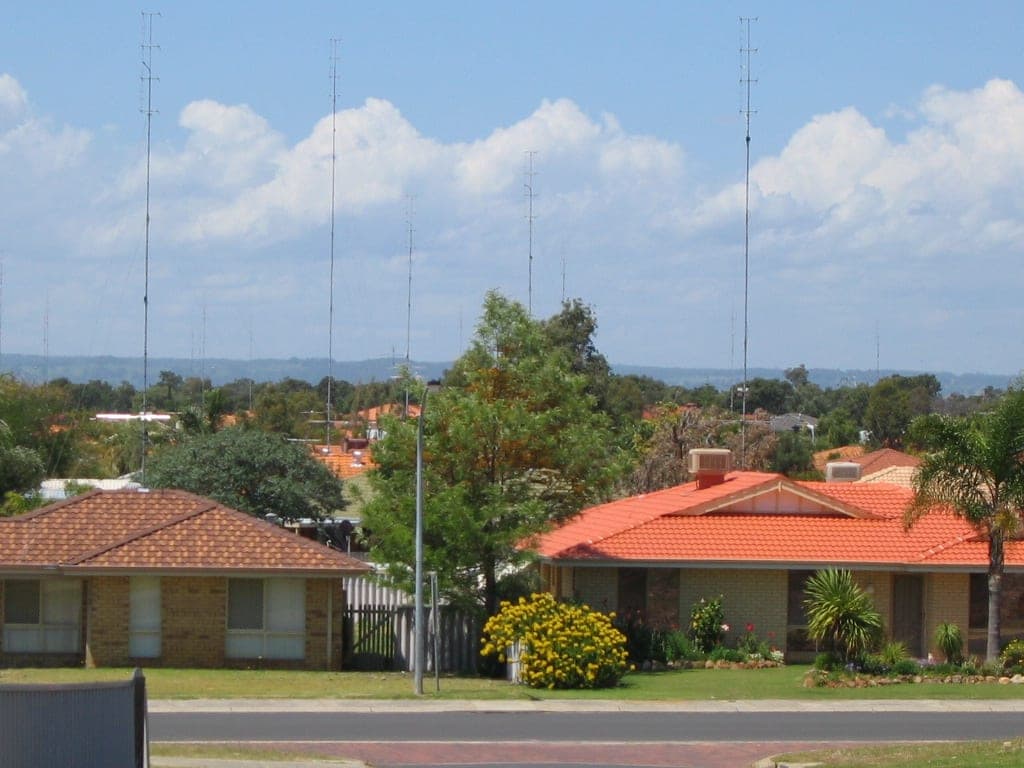
A young Australian in 2026 lives in a way that would have looked like minor royalty to her grandparents. Her family's new house, if it is newly built, averages around 235.8 square metres of floor area — the largest in the world, ahead even of the United States, according to CommSec's analysis of Australian Bureau of Statistics data. She carries in her pocket a device with more computing power than the Apollo program, streams the planet's film libraries for the price of a sandwich, cools her bedroom on a 40-degree day at the touch of a button, and can fly to Bali for less, in real terms, than her grandfather paid to take the train to Melbourne. By almost every material measure that economists can put a number against, she is richer than any Australian who has ever lived.
And she feels like she is losing.
This is not a contradiction she has invented. It is a structural feature of how human beings assess their own lives, and it is one of the oldest observations in political thought. The contributor who suggested this piece put it precisely: human dissatisfaction is not caused only by material deprivation; it is amplified by relative comparison. People rarely measure their lives against the Australians of fifty years ago. They measure against their colleagues, their neighbours, their old schoolmates, and the curated lives scrolling past on their phones. When expectations rise faster than living standards, a society can grow wealthier and more dissatisfied at the same time.
The argument of this essay is that this paradox is not a glitch of the smartphone age. It is a pattern — perhaps the pattern — that the ancients mapped with disturbing precision, that recurs across civilisations separated by thousands of years and oceans of difference, and that today's data on Australia fits almost too neatly. Aristotle named the mechanism. Plato and Polybius built it into a cycle. Ibn Khaldun put it on a generational clock. Tocqueville showed that prosperity itself can be the accelerant. And modern empirical historians, from James C. Davies to Peter Turchin, have turned the insight into something close to a measurable curve. The cyclical view of history holds that "this time is different" is the most reliably wrong sentence in politics. On the evidence, Australia's prosperity paradox is a case in point.
Why does rising prosperity breed rising discontent?
Start with the strangest fact in the data. Across more than two decades of relentless economic growth, Australians' average life satisfaction has not moved. Drawing on the Household, Income and Labour Dynamics in Australia (HILDA) survey, the Australian Institute of Health and Welfare reports that "life satisfaction in Australia has remained stable at around 8 out of 10 since 2001" — 7.95 in 2001, 7.98 in 2024, a 24-year flat line well inside the 0.2-point band the OECD treats as meaningful. Over the same period, real GDP per capita rose substantially. The country got much richer. Its reported happiness did not budge.
This is the Australian instance of what economists call the Easterlin paradox, after Richard Easterlin's 1974 finding. As summarised in the standard account, "at a point in time, happiness varies directly with income both among and within nations; but over time, happiness does not trend upward as income continues to grow." Richer people are, on average, happier than poorer people at any given moment — but make everyone richer, and the average sits still. The explanation that has survived fifty years of argument is relative: "the effect of additional money on how we feel about our lives is not just about how wealthy we are in absolute terms, but how wealthy we are compared to other people." We are not utility-maximising machines reading an absolute thermometer of wealth. We are ranking animals, reading our position against the people around us.
That single adjustment — from absolute to relative — dissolves the apparent contradiction in the brief. Larger houses, cheaper flights and pocket supercomputers raise the baseline for everyone, and a baseline that rises for everyone changes no one's rank. Meanwhile the things that do signal rank — a freestanding house in a good suburb, a postcode, the ability to buy in at all — have become dramatically scarcer relative to demand. The result is a society that has, in absolute terms, never had more, while feeling that the prize that matters most has never been further away.
The ancients would not have found any of this surprising.
What did Aristotle already know about this?
In Book V of the Politics — the oldest systematic study of why political orders break down — Aristotle set out to explain stasis, the factional conflict and upheaval that destroys constitutions. His conclusion was not that revolutions are caused by poverty. It was that they are caused by a perception of unjust inequality, by the felt gap between what people believe they deserve and what they have.
"The universal and chief cause of this revolutionary feeling," he wrote, is "the desire of equality, when men think that they are equal to others who have more than themselves." His formulation has never been bettered for compression: "Inferiors revolt in order that they may be equal, and equals that they may be superior. Such is the state of mind which creates revolutions." Note what is doing the work here. Not hunger. Not absolute want. A state of mind — a comparison, a sense of being unjustly behind. "Everywhere," Aristotle insisted, "inequality is a cause of revolution."
Crucially, he understood that the trigger is rarely proportionate to the stakes. "In revolutions the occasions may be trifling, but great interests are at stake." A small slight, a single thwarted expectation, can ignite a conflagration whose real fuel was accumulated long before. Translate that into the Australian present and it reads like commentary on the housing debate: the proximate trigger is an auction result, a rent increase, a friend's deposit gifted by parents — trifles, in Aristotle's sense — but the great interest at stake is whether a whole generation believes the implicit contract of the society still holds for them.
Aristotle's prescription, often forgotten by those who quote his diagnosis, was equally precise: the most stable constitution is the one with a large, secure middle class, because where the middle is strong the gap that breeds stasis is narrowest. Hold that thought; it matters for where Australia is heading.
Did Plato and Polybius see the same cycle?
Aristotle's teacher had already built the insight into a theory of decline. In Book VIII of the Republic, Plato traced regimes degenerating one into the next, each undone by an appetite it could not regulate. Oligarchy's defining aim, he wrote, is "to become as rich as possible, a desire which is insatiable" — and "the insatiable desire of wealth and the neglect of all other things for the sake of money-getting was also the ruin of oligarchy." Democracy in turn is undone not by want but by an insatiable appetite for liberty, until, in his most quoted warning, "the excess of liberty, whether in States or individuals, seems only to pass into excess of slavery." The engine of decline, for Plato, is insatiability itself — the structural impossibility of satisfying a desire that grows by being fed.
A century and a half later, the Greek historian Polybius watching Rome's rise gave the cycle its name: anacyclosis. His sequence ran monarchy, kingship, tyranny, aristocracy, oligarchy, democracy, and finally ochlocracy — mob rule — before the wheel turned back to one-man rule again. The mechanism at each turn was the same and entirely human: a good form is founded by people who remember why it was needed; their descendants inherit power they did not earn, "abuse their authority for their own gain," and the form curdles into its corrupt twin. Each generation's prosperity erodes the discipline that produced it.
What Plato and Polybius added to Aristotle is the dimension of time. Decline is not an accident that might be avoided with better management; it is a tendency latent in success itself, transmitted across generations. A society does not fall because it failed. It falls, in part, because it succeeded, and forgot the cost of success.
What happened to the republic Polybius admired?
Polybius wrote his praise of Rome's balanced constitution at the Republic's zenith. Within a generation the cycle he had described began to turn — and the Roman case is the clearest worked example in the record of the exact mechanism this essay is tracing, which is why the historian Peter Turchin returns to it again and again.
The trouble was not poverty in the absolute sense. Rome in the second century BC was the richest state the Mediterranean had ever seen, fat on the spoils of conquest. The trouble was distribution and expectation. As the standard survey of the Crisis of the Roman Republic records, "after the Second Punic War, income inequality increased significantly. While the landed peasantry was drafted to serve in increasingly long campaigns, their farms and homesteads fell into bankruptcy." The spoils flowed to the senatorial elite, who consolidated the land into vast slave-worked estates — the latifundia — while the citizen-soldiers who had won the wars came home to find their smallholdings gone and the cities swelling with the dispossessed. The asset that conferred full status and standing — land — was concentrating out of reach of the very men who felt most entitled to it. Substitute "house" for "land" and the sentence is about Australia.
The detonation came in 133 BC, when the tribune Tiberius Gracchus proposed redistributing public land to the landless. It was the textbook Tocqueville move — an attempt to relieve a grievance — and it produced the textbook Tocqueville result: not gratitude, but escalation. The Senate had Tiberius killed; his brother Gaius and thousands of supporters were massacred in 121 BC; and the norm that disputes were settled by debate rather than blood was gone. The tribunate of Tiberius Gracchus in 133 BC, in the standard account, "led to a breakup of the long-standing norms of the republican constitution" and marked "the beginning of the crisis."
What followed is the most instructive part — the "what happened next" the cyclical theorists insist on. The gap did not close; it widened, and the elite competition Turchin describes turned Roman politics into a century-long demolition: street violence under Marius, Sulla's march on his own city in 88 BC, the Social War, the civil wars of Caesar. Violence became, in the grim summary of the period, "a logical and more effective alternative to political engagement, negotiation, and compromise." The Republic did not fall to a foreign army; it dismantled itself over roughly a hundred years, until in 27 BC the wreckage was handed to one man — "Octavian, now Augustus, became the first Roman Emperor in 27 BC and transformed the oligarchic republic into the autocratic Roman Empire." Polybius's anacyclosis had completed precisely one turn: oligarchy and democracy giving way, through chaos, to the rule of one.
The Roman lesson is not that Australia faces civil war — the case against that alarmism comes shortly. It is that the sequence is real and slow: rising inequality of access to the central asset, a generation that feels unjustly locked out, an attempted reform that raises the temperature rather than lowering it, hardening factions, decades of corrosion. Rome ran the full experiment. It is the most thoroughly documented confirmation in the record that the pattern the brief describes — abundance at the top, grievance below, instability following — is not a modern anxiety but a recurring historical fact.
How does Ibn Khaldun's dynastic cycle fit?
The most explicit generational clock was set by the fourteenth-century North African historian Ibn Khaldun, whose Muqaddimah is the founding text of the sociology of civilisations. His central concept was asabiyyah — group solidarity, social cohesion, the shared sense of "we" that lets a people act together. "Asabiyyah," he observed, "is strongest in the nomadic phase, and decreases as civilization advances." A group bound by hardship and common purpose conquers; settles; grows rich; and then, generation by generation, softens. As the descendants "establish themselves at the center of their empire, they become increasingly lax, less coordinated, disciplined and watchful, and more concerned with maintaining their new power and lifestyle." Luxury, in other words, is corrosive precisely because it is comfortable.
Ibn Khaldun even gave it a timetable: "no dynasty generally lasts beyond three generations of about 40 years each." The first generation builds, hard and hungry. The second consolidates, having seen the building. The third inherits only the comfort, knows nothing of the cost, and presides over the erosion. "Any dynasty," he warned, "has within itself the seeds of its own downfall."
Count the generations in Australia. The cohort that came of age in the austere, rationed years after 1945 built the suburbs, the universities and the institutions of the long boom. Their children — the Baby Boomers — inherited and expanded that abundance, riding an unbroken rise in asset values. Their grandchildren are now the third generation: heirs to the comfort, locked out of the asset, and increasingly unconvinced that the cohesion holds. The Australian Bureau of Statistics has measured the erosion directly. "Over half (55 per cent) of Millennials, 25–39 year olds, are homeowners," it reports, "compared with 62 per cent of Generation X and two thirds (66 per cent) of Baby Boomers when they were the same age." More starkly: "the 25–39 year old Baby Boomers in 1991 were three times more likely than the 25–39 year old Millennials in 2021 to own their home outright." Three generations; an unmistakable decline curve. Ibn Khaldun would have recognised the shape on sight.
Why does prosperity itself hasten the revolt? Tocqueville's paradox
Here the cyclical tradition makes its most counter-intuitive — and most relevant — claim. It is not at the bottom of the curve that societies become dangerous. It is on the way up, after a long improvement, that frustration peaks.
Alexis de Tocqueville drew the lesson from the event that obsessed his century. The French Revolution, he argued in The Old Regime and the Revolution, did not erupt from France's most wretched, downtrodden corners. It erupted from the parts of the country where conditions had been improving — where the bonds of feudal servitude had recently loosened. His conclusion has become a law of political science: "The regime that a revolution destroys is almost always better than the one that immediately preceded it, and experience teaches that the most dangerous time for a bad government is usually when it begins to reform." Relief did not buy gratitude. It raised expectations, and every burden that was lifted threw the remaining burdens into sharper, more intolerable relief.
This is the "Tocqueville effect," defined succinctly as the phenomenon whereby "as social conditions and opportunities improve, social frustration grows more quickly." In Democracy in America he had already spotted the engine: "the love of equality should constantly increase together with equality itself," and "the hatred that men bear to privilege increases in proportion as privileges become fewer and less considerable." The closer a society comes to equality, the more unbearable the remaining gaps become — because the remaining gaps are the only ones still visible. The phrase historians later coined for the dynamic — the revolution of rising expectations — names exactly the brief's thesis. Expectations, once raised, do not wait politely for reality to catch up.
Apply the lens to Australia and the housing story changes character. For two generations, rising home values were experienced as a national success — the great Australian asset, the loosening of an old servitude, proof that ordinary families could build wealth. That very success raised the expectation, baked it into the culture, made home ownership the assumed birthright of adulthood. The reversal of access, when it came, did not land on a population that had never hoped. It landed on a population that had been promised, and had believed. That is the Tocqueville configuration exactly: not the misery of those who never expected, but the fury of those whose expectations were raised and then betrayed.
Can the pattern be measured?
In the twentieth century the intuition became a curve. In 1962 the sociologist James C. Davies proposed what is now known as the J-curve theory of revolution. His claim was that "social and political unrest was precipitated by a brief period of sharp decline in economic development after a prolonged period of economic growth and improvement." The mechanism was psychological and explicitly about expectations: "persistent economic growth and advance lead to the development of psychological expectations that conditions will continue to improve," and "when such expectations are suddenly thwarted, individuals experience an intolerable gap between what they have come to expect and the realities of their circumstances." That gap — between the rising line people expected and the falling line they got — is the J. Revolutions, Davies concluded, "would be most likely to occur when a period of improvement is followed by a sharp worsening of circumstances."
Davies was deliberately synthesising Tocqueville with Marx, and his "intolerable gap" is simply the measurable form of Aristotle's "state of mind." It is also, almost line for line, the brief's description of Australia: a generation that grew up on the assumption that each cohort would do better than the last, meeting a sudden, sharp deterioration in the one asset that defines middle-class arrival.
The most ambitious modern attempt to put numbers on the whole cycle is Peter Turchin's "cliodynamics" — the quantitative study of historical dynamics. Turchin argues that recurrent waves of political instability are driven by two measurable pressures. The first is popular immiseration: stagnating or falling living standards for the broad population, often masked by headline growth. The second, and the one he treats as the more reliable leading indicator, is elite overproduction — defined as "the condition of a society that has an excess supply of potential elite members relative to its ability to absorb them into the power structure." Society produces more highly educated, ambitious, credentialled aspirants than it has elite slots to seat them in; the surplus, "those left out of power, feel aggrieved by their relatively low socioeconomic status"; and intra-elite competition turns toxic. What concentrates the wealth that powers this — what Turchin in End Times (2023) calls the "wealth pump" — is a structure that channels gains upward while the median stalls. His much-publicised forecast, made years in advance, was that "the next decade is likely to be a period of growing instability in the United States and western Europe," with the relevant cycles set to "peak in the years around 2020."
Now read Australia against that template. Mass university expansion has produced the most credentialled generation in the nation's history — a textbook surplus of elite aspirants. The asset that converts a good income into elite status, the well-located home, has been priced beyond their reach. And the broad measure of progress has flatlined: life satisfaction frozen at 7.9 while the cost of the central status good ran away. Popular immiseration in relative terms, atop elite overproduction, is precisely the configuration Turchin's model flags.
How do the civilisations rhyme?
The striking thing is not that any one thinker described Australia. It is that thinkers separated by 2,000 years, working on Greek city-states, the Roman Republic, medieval North African dynasties, revolutionary France and twenty-first-century America, converged on the same mechanism: discontent is relative and expectation-driven, prosperity raises expectations faster than it can satisfy them, and the resulting gap — not absolute want — is what destabilises an order.
| Thinker / era | The recurring pattern named | The mechanism of instability |
|---|---|---|
| Aristotle, Politics (4th c. BC) | Stasis | Perceived unjust inequality; the desire of equality, "a state of mind which creates revolutions" |
| Plato, Republic (4th c. BC) | Cycle of regimes | Insatiable desire — for wealth, then for liberty — degrading each regime into the next |
| Polybius, Histories (2nd c. BC) | Anacyclosis | Heirs abuse inherited power; each good form curdles into its corrupt twin |
| Late Roman Republic (133–27 BC) | Worked example | Land concentrated out of reach of locked-out citizens → a century of civil strife → one-man rule |
| Ibn Khaldun, Muqaddimah (14th c.) | Dynastic cycle / asabiyyah | Luxury erodes the cohesion that built the dynasty, over ~3 generations |
| Tocqueville (19th c.) | Revolution of rising expectations | Improvement raises expectations and makes remaining inequalities intolerable |
| Davies (1962) | J-curve | An intolerable gap opens when long improvement is followed by sharp reversal |
| Turchin (2010s–) | Cliodynamics | Elite overproduction + popular immiseration drive recurrent instability |
Seven independent readings of the human record, one pattern. That convergence is the strongest evidence the cyclical tradition can offer, and it is what makes the confident modern assumption — that growth plus democracy has permanently retired the old dynamics — look less like knowledge and more like the very complacency Ibn Khaldun warned the third generation always feels.
But isn't this time genuinely different?
Intellectual honesty requires steelmanning the counter-case, because parts of it are strong.
Australia is not a Greek polis or a Khaldunian dynasty. It has a welfare state, compulsory superannuation, Medicare and a minimum wage that put a floor under absolute deprivation no ancient society possessed; nobody is starving because house prices rose. It has democratic safety valves — elections, a free press, an independent judiciary, federalism — that convert discontent into ballots and policy rather than blood. There is no hungry tribe of stronger asabiyyah massing on the periphery to topple a soft centre; Ibn Khaldun's external challenger has no twenty-first-century Australian equivalent. Modern states command fiscal and monetary tools that can cushion a Davies-style reversal in a way no Bourbon finance minister could. And the empirical case against the cycle is real: the economists Betsey Stevenson and Justin Wolfers have mounted a serious challenge to the Easterlin paradox itself, arguing the data show a more positive long-run link between income and well-being than Easterlin allowed. The cyclical reading is a tendency, not a law of physics, and it has been wrong before — every prophet of inevitable collapse eventually meets a society that didn't.
These objections genuinely break parts of the analogy, and the responsible version of the cyclical thesis concedes them. But they do not touch its core, for three reasons.
First, the mechanism the ancients identified is relative and psychological, and none of the modern cushions addresses it. A welfare state abolishes absolute destitution; it does nothing about the gap between expectation and rank that Aristotle, Tocqueville and Davies all located as the real fuel. Indeed Tocqueville's whole point is that those very reforms raise the expectations whose betrayal does the damage.
Second, instability in a mature democracy need not — and historically does not — arrive as guillotines. It arrives as the symptoms we can already measure: collapsing trust in institutions, electoral volatility and the fracturing of stable party allegiances, the surge of populist and counter-elite movements of left and right, declining family formation and fertility as the markers of adult arrival recede, and the quiet exit of talent to other countries. These are precisely the modern, parliamentary expressions of stasis — Aristotle's factional conflict, conducted by other means. The cycle does not require tanks to be operating; it requires only that the gap keep widening.
Third, the demographic-structural pressures Turchin tracks are indifferent to the welfare state. A society can guarantee everyone healthcare and still produce far more elite aspirants than elite positions, still run a wealth pump that locks the credentialled out of the assets that confer status. The safety net catches the body; it does not close the gap in the mind.
So the honest verdict is mixed, and that is the point of a rigorous cyclical reading rather than a fatalist one: the modern cushions make catastrophic, violent rupture far less likely than in any previous era, while leaving the underlying mechanism — relative deprivation amid plenty — fully intact. This time the consequences may be different. The cause is not.
What does this mean for "inequality of outcome"?
The contributor's provocation — that the standard framing of inequality is, in a sense, debunked — survives this tour of the sources, though with a twist. The cyclical tradition does not say inequality is harmless; Aristotle says the opposite, that "everywhere inequality is a cause of revolution." What it says is that the metric most often reaching for — inequality of outcome, the snapshot Gini coefficient at a single moment — is the wrong instrument for predicting discontent. Australia's measured income inequality is moderate by international standards, yet its sense of generational grievance is acute. The variable that actually tracks the unrest is not the static gap between rich and poor. It is the dynamic gap between expectation and attainment — the J-curve gap, the Tocqueville gap, the distance between the life a generation was promised and the one it can reach. A society can compress its outcome inequality and still seethe, if expectations have outrun delivery; it can tolerate considerable inequality and stay calm, if each cohort still feels it is rising. Outcome, measured at an instant, is the wrong axis. Trajectory, felt over a lifetime, is the right one.
Where does the trajectory point — and is it fixed?
The cyclical view is often mistaken for fatalism. It is not, and the ancients who described the cycle also prescribed against it. Aristotle's remedy for stasis was a large, secure middle class that narrows the gap stasis feeds on. Tocqueville's implicit warning was that reform must move faster than the expectations it raises, not slower. Turchin's explicit recommendation is to "turn off the wealth pump" — to change the structures that concentrate gains and starve the median. None of these requires abolishing prosperity; they require managing the distribution of the central status good so that the rising expectations of each generation are met by a real, reachable path.
For Australia, the through-line of every source in this essay points at the same pressure valve. The asset that has become the proxy for rank, generational arrival and security — the well-located home — is the gap. Restore a believable path into it, and the J-curve never completes; the elite-aspirant surplus finds a slot; the third-generation cohesion holds. Leave the gap to widen, and the country will keep registering the symptoms the model predicts: flat satisfaction atop rising wealth, falling trust, volatile politics, and a generation that is, by every absolute measure, the richest in the nation's history — and convinced, not irrationally, that it is the first to go backwards.
History does not repeat, the line attributed to Mark Twain runs, but it rhymes. On the prosperity paradox, the rhyme is 2,400 years old, and Australia is, right now, reciting the next line.