A Number That Changes the Story
For decades, the benchmark for how fast a power technology could scale was set by natural gas. In 2002, at the height of a global infrastructure buildout, the world added roughly 107 GW of gas-fired generating capacity in a single year — a record that stood for more than two decades.
That record fell last year.
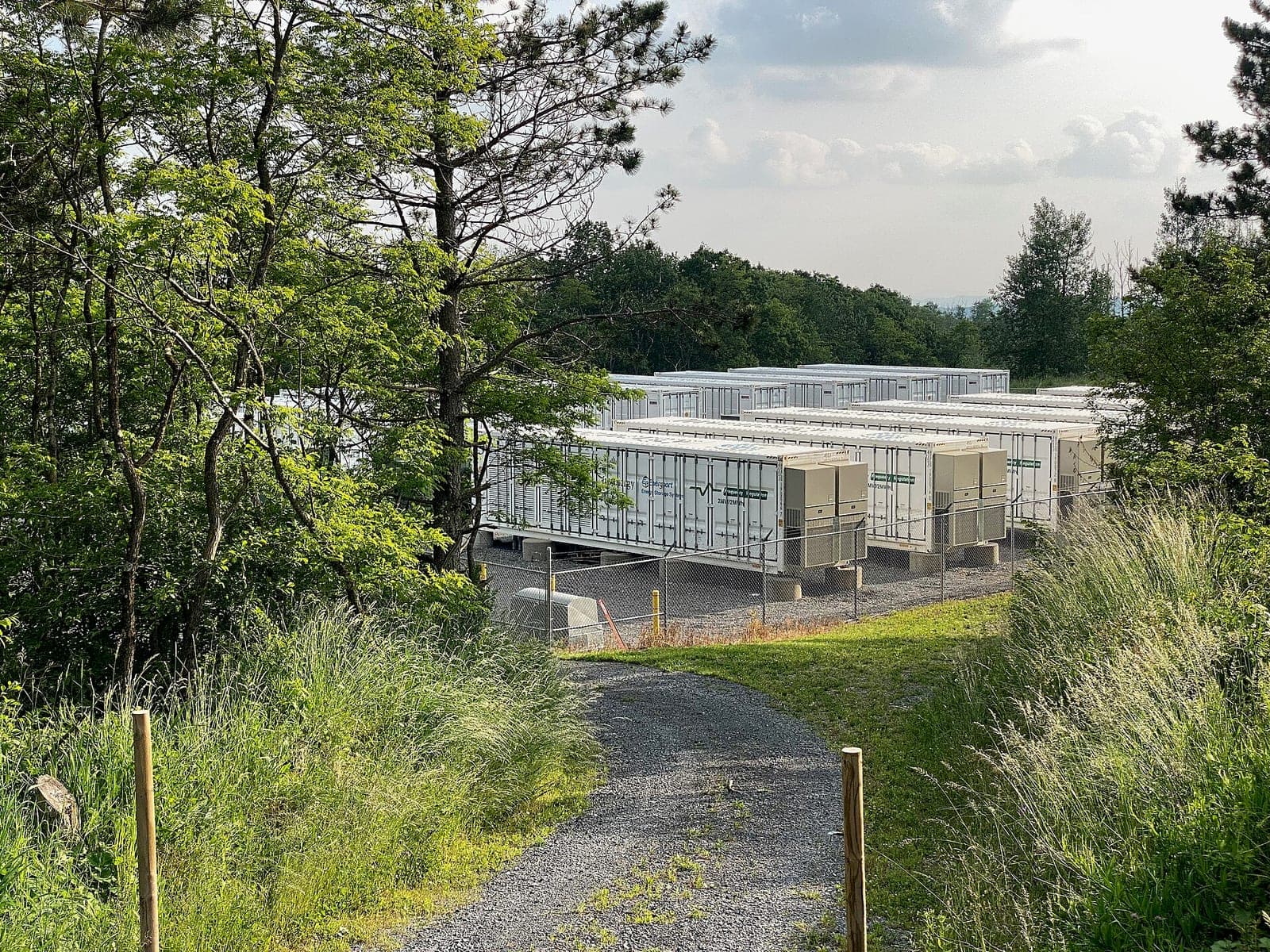
According to a report published June 1 by the International Energy Agency (IEA), the world deployed 108 GW of battery energy storage in 2025 — an increase of approximately 40 percent from 2024. It is the first time in recorded history that energy storage additions have eclipsed the all-time annual deployment peak for any conventional power technology.
"Battery storage is no longer viewed simply as a supporting technology," the IEA noted in its findings. "It is rapidly becoming a foundational element of the global energy transition."
From Backup to Backbone: The Operational Shift
The 108 GW headline is dramatic, but arguably more consequential are the operational statistics emerging from grids where storage has been building for years.
In California — which has installed more than 55 GW of solar capacity, enough to routinely exceed peak daytime demand — battery systems supplied more than 40 percent of evening electricity demand during a period of high renewable generation and rising consumption in March 2026, according to the IEA data. More strikingly, batteries now meet more than 60 percent of California's hourly grid balancing needs in the first quarter of 2026, up from less than 1 percent five years ago.
The pattern is repeating elsewhere. In Texas, batteries contributed more than 40 percent of ramping requirements within the ERCOT electricity market during April 2026. In South Australia, one of the world's most renewable-intensive systems, batteries provide more than 30 percent of hourly ramping needs during certain periods, according to the IEA.
The average duration of new utility-scale battery projects reached approximately three hours in 2025, up from around two hours just two years earlier, reflecting the shift from ancillary services to full-scale energy shifting.
The Cost Case Is Now Settled
A separate IRENA analysis published May 6, titled "24/7 Renewables: The Economics of Firm Solar and Wind," provides the economic underpinning for why deployment is accelerating so rapidly.
Firm levelized costs of electricity for solar-plus-storage in high-irradiance regions now range from $54/MWh to $82/MWh, the agency found. That compares with $70/MWh to $85/MWh for new coal in China, and more than $100/MWh for new natural gas globally — meaning round-the-clock renewable-plus-storage power is already cheaper than new fossil fuels at the world's best sites.
Since 2010, solar installed costs have fallen 87 percent, onshore wind 55 percent, and battery storage 93 percent, according to IRENA. The agency projects a further 30 percent cost reduction by 2030 and roughly 40 percent by 2035, bringing firm solar-plus-storage below $50/MWh at top-performing sites.
"The long-standing argument that renewables lack reliability no longer holds," said IRENA Director-General Francesco La Camera. "Today, renewables can deliver reliable, round-the-clock power."
A real-world example IRENA cited: the UAE's Al Dhafra complex, pairing photovoltaic panels with battery storage, already delivers a firm 1 GW of clean electricity at around $70/MWh.
The United States Heads for a Record Year
In the United States, 2026 is shaping up as an inflection point. According to the U.S. Energy Information Administration's April 2026 Electric Power Monthly report, developers plan to add 86 GW of new utility-scale capacity this year — the largest single-year expansion on record.
Solar leads with 43.4 GW planned (51 percent of the total), a 60 percent increase over 2025. Battery storage follows with 24 GW planned (28 percent), surpassing the 15 GW record set in 2025. Wind adds another 11.8 GW. Natural gas, by comparison, accounts for just 6.3 GW.
Texas is driving the buildout. The state is home to 40 percent of all planned solar additions and 53 percent — or 12.9 GW — of the nation's new battery storage capacity. The largest single project slated for 2026 is the Tehuacana Creek 1 Solar and BESS facility in Navarro County, Texas, which will add 837 MW of solar paired with 418 MW of battery storage. Other major projects include the 621 MW Lunis Creek BESS in Jackson, Texas, and the 500 MW Bellefield 2 Solar & Energy Storage Farm in Kern County, California.
By end of Q1 2027, EIA projects total U.S. battery storage capacity will surge from 44.6 GW to over 67 GW — a 51 percent increase in roughly 12 months.
Renewable generation output grew 10.8 percent in the first two months of 2026, reaching 26 percent of total U.S. electricity generation, up from 23.6 percent in the same period of 2025.
The Investment Numbers Confirm the Direction
The IEA's World Energy Investment 2026 report, published in late May, places these trends in the context of $3.4 trillion in global energy investment expected this year — a 5 percent increase from 2025's record. Of that, approximately $2.2 trillion is directed at low-emission energy technologies including renewables, grids, storage, and efficiency.
Solar alone attracts an estimated $365 billion — roughly $1 billion per day — making it the single largest category of global energy investment. Grid investment approaches $550 billion. Battery storage investment exceeds $100 billion, according to the IEA.
A geopolitical dimension is accelerating the shift. IEA Executive Director Fatih Birol stated that the ongoing Middle East conflict and disruptions around the Strait of Hormuz represent "the greatest energy security crisis the world has ever faced," and cited evidence that fuel-importing nations are rapidly accelerating domestic clean energy deployment as a strategic hedge. In South and Southeast Asia, low-emissions sources now account for about 75 percent of total power generation investment, up from around 60 percent in 2019.
The Market Is Broadening
The IEA's battery data confirms the 2025 boom was not confined to China, the US, and Europe. Australia deployed nearly 8 GW of battery storage in 2025 — almost nine times the previous year's total — supported by federal and state incentive programs. The Middle East added more than 3 GW, more than tripling 2024 levels, largely driven by Saudi Arabia. Chile's additions approached 1 GW, reflecting the country's expanding solar integration challenge.
China continued to lead in absolute volume, adding more than 63 GW of new battery capacity in 2025 (approximately one-third year-on-year growth), with utility-scale installations accounting for around 55 GW of that total.
Challenges Remain
Despite the growth trajectory, the IEA and industry analysts flag persistent bottlenecks. Regulatory uncertainty remains significant in markets where storage has yet to be formally integrated into electricity market frameworks. Grid connection delays and permitting processes typically account for a large share of project development timelines, with European, US, and Japanese projects generally requiring two to two-and-a-half years from start to operation.
In the United States, an emerging concern is fixed-charge utility fee structures, now passed in 27 states, which critics argue distort the economics of rooftop solar and distributed storage by removing price signals that incentivize self-generation.
The underlying direction, however, is clear: a technology that provided less than 1 percent of California's grid balancing five years ago now provides more than 60 percent. By almost every measure — deployment volume, cost curve, operational share, and investment — the story of battery storage has moved from emerging technology to defining infrastructure.