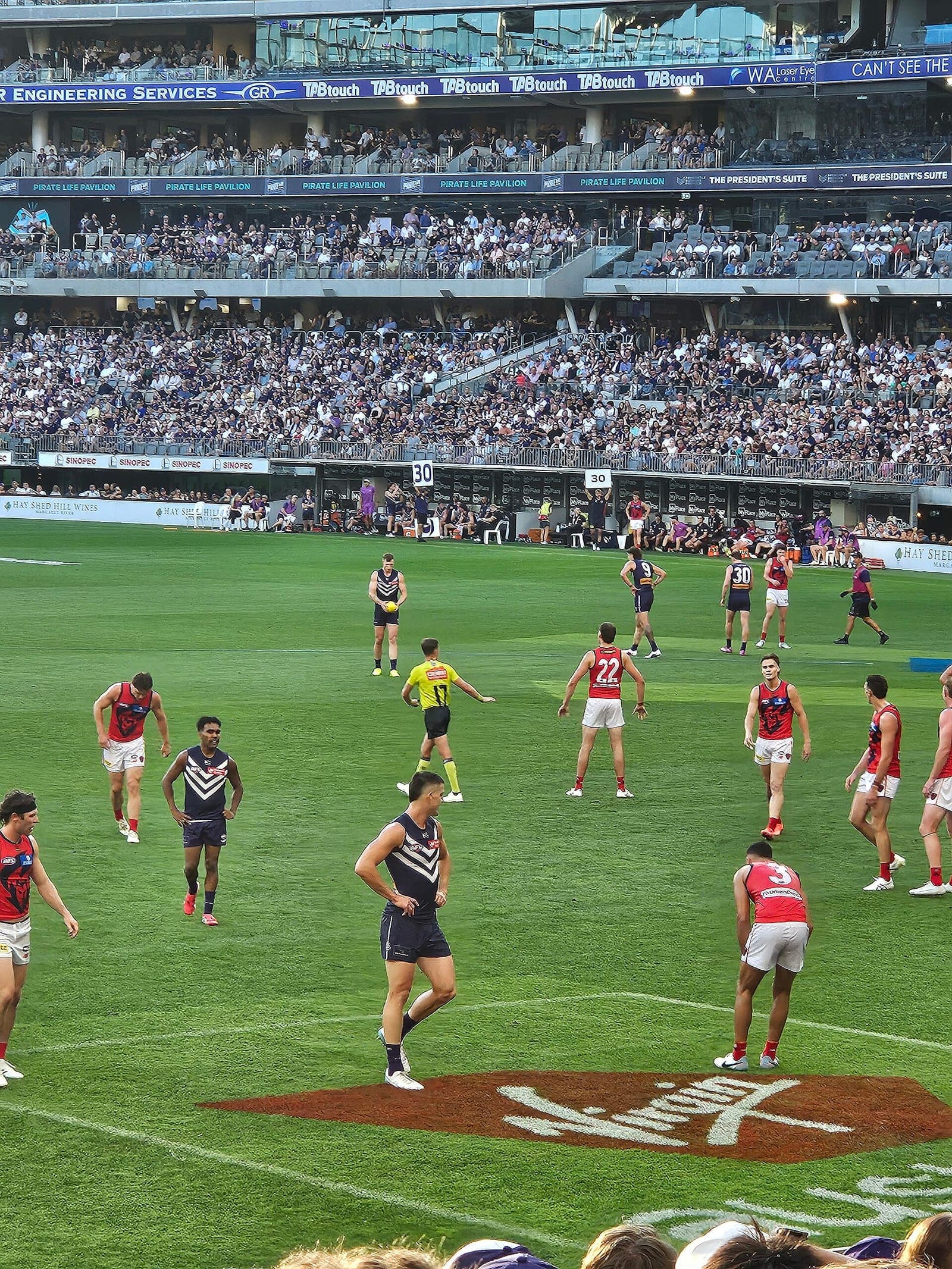
Fremantle have spent the first three months of the 2026 AFL season doing something the club has never done: looking like the best team in the competition. The Dockers sit on top of the ladder at 11-1, their only blemish the season opener against Geelong, and the 11 straight wins that followed are a club record. For a side that is one of only three active AFL clubs never to have won a premiership, the question has shifted from whether Fremantle are good to whether they are finally good enough.
How good is the start, really?
An 11-1 record is the headline, but the context sharpens it. Since the midpoint of last season the Dockers have won 23 of 27 matches, and all three of their losses in that span came by 11 points or fewer. This is not a team riding a hot month; it is a year of sustained results. The winning streak is the longest in the club's three-decade history, and it includes a 25-point win over reigning premier Brisbane at the Gabba — Fremantle's first victory there since 2016. The benchmark of recent seasons was beaten away from home, with the Lions' premiership defence already stalling at 6-6.
What actually changed: the forward line
The historical knock on Fremantle was simple — they could not score. That has flipped. The Dockers' three-pronged tall attack of Josh Treacy, Jye Amiss and Patrick Voss has combined for 78 goals, and the team's scoring has jumped from 86.0 points a game in 2025 to 96.4 this season. The improvement runs deeper than raw points: per ESPN's analysis, Fremantle's points-scored ranking has climbed from 14th in 2023 to 7th, and their scores per inside 50 from 13th to 5th — a sign the attack is more efficient, not just busier. Treacy, the club's best-and-fairest leader, has become a genuine power forward, and the forward line now wins both contested and leading marks rather than relying on one look.
The engine room and the back half
A premiership profile needs both ends, and Fremantle have built one. The midfield is led by co-vice-captain Caleb Serong, who in the win over Hawthorn racked up 28 disposals, eight clearances and eight inside 50s. He is not carrying it alone: in that same game Shai Bolton had 22 disposals and five clearances, first-year midfielder Murphy Reid collected 20 disposals and nine inside 50s, and ruckman Luke Jackson tilted the contest with a dominant final term. That depth shows up in the individual honours race, too, with Treacy, Jackson, Serong, Reid, Bolton and Pearce all in All-Australian contention. But the foundation is defence: Fremantle rank first in the league for points conceded and for opposition scores per inside 50, the most miserly back half in the competition, with captain Alex Pearce anchoring it. The result is the balance the club has chased for years — a top-seven attack bolted onto the No. 1 defence — which is why several analysts now rate this the most complete Fremantle side ever assembled.
The signature wins
Two results capture the team's character. Against Hawthorn at Optus Stadium, in front of 54,140, Fremantle trailed by 19 points early in the final quarter before booting the last five goals to win 12.16 (88) to 11.7 (73). Michael Frederick kicked three for the match, two of them on the run, and Jye Amiss snapped the go-ahead goal late in the term before a Luke Jackson smother helped slam the door — a 15-point escape that showed the Dockers can win ugly. Then came the Gabba, where the Dockers dismantled the reigning premier by 25 points, Amiss, Treacy and Voss combining for 11 goals in Fremantle's first win there since 2016. One result showed resilience under pressure; the other showed they can travel and beat the best. Both are exactly the kind of evidence September teams are made of.
So is it real? The case for caution
This is where a neutral reading matters. Fremantle lead the ladder, but Sydney sit second on a league-best percentage of 152.4 — far clear of Fremantle's mark in the 130s. The Swans are winning by more. The two sides' recent meetings have been decided by just 15 points in aggregate, so there is little between them, but percentage is the tiebreaker that decides double chances and home finals, and on that measure Fremantle are not the dominant team their position suggests. Several of their wins have been narrow, and a mid-season review flagged "inconsistent ruthlessness" when games are there to be put away.
| Fremantle's two-way transformation | Then | 2026 |
|---|---|---|
| Points per game | 86.0 (2025) | 96.4 |
| Points-scored ranking | 14th (2023) | 7th |
| Scores per inside 50 ranking | 13th | 5th |
| Defence (points against) | — | 1st |
| Winning streak | — | 11 (club record) |
What it means for September
The schedule offers a measuring stick: Fremantle host Geelong — the only side to beat them — after their bye, a rematch that doubles as a referendum on their top-four credentials. The deeper question is historical. Fremantle's lone grand final came in 2013, a 15-point loss to Hawthorn, and the club's one minor premiership in 2015 ended without a flag. The pattern the Dockers most need to break is their own: strong home-and-away seasons that have not converted in finals, often undone by late-season injuries. The health of midfielder Hayden Young looms as a genuine swing factor.
For now, the numbers back the hype more than they puncture it. As ESPN put it bluntly, "Any remaining scepticism about a Fremantle flag is more about denial than reality." Whether that holds through September — and whether Sydney's superior percentage proves the more telling number — is the story the rest of 2026 will tell. But for the first time, Fremantle are setting the pace rather than chasing it.