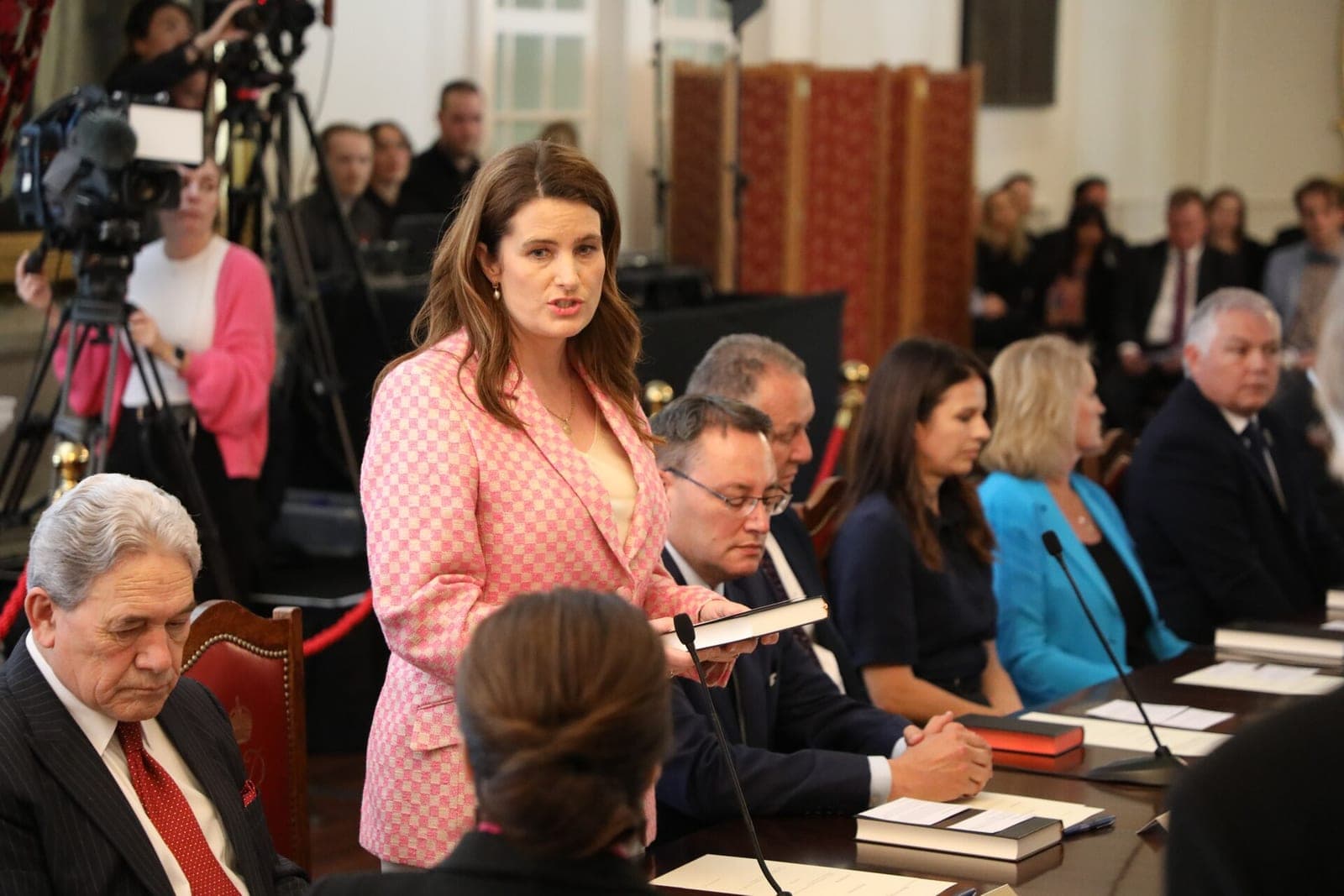
New Zealand's books are heading back into the black a year ahead of schedule — and the coalition government has managed it in the teeth of a global oil shock. Budget 2026, delivered by Finance Minister Nicola Willis on May 28, forecasts a return to operating surplus of NZ$2.6 billion in 2028/29, a full year earlier than the late-2025 projection and the country's first surplus since 2020. "I'd expected to say good afternoon, but I'm here a little early – like the surplus," Willis told reporters. The quip captured the story: the National–ACT–NZ First government's fiscal discipline is paying off sooner than promised.
A surplus, ahead of schedule
The headline number is the vindication. Treasury now sees the operating balance reaching a $2.6 billion surplus in 2028/29, pulled forward a year from the 2029/30 date forecast only months earlier — and the first surplus New Zealand has run since 2020. It was bought with restraint, not luck: most departments face cuts building to roughly 12% over time, and fees-free tertiary study was scrapped to save about $1 billion over four years. In an election year, when the temptation is to hand out a "back-pocket boost," the government chose credibility instead. "Sugar hits don't work, they only make it more painful in the long run," Willis said — a line that doubles as the Budget's governing philosophy.
Discipline in the teeth of a shock
What makes the result striking is the backdrop. As the Budget was being finalised, the United States struck Iran and Tehran closed the Strait of Hormuz, and, in the words of one analysis, "surging oil prices reignited inflation while dragging growth forecasts lower." Inflation is now forecast to peak near 4% in the June 2026 quarter. Plenty of governments would have used the shock as cover to abandon their targets. Willis did the opposite: "With a global fuel crisis underway, some would have us put those plans on hold; we say no — those goals are more important now than ever before." Holding a fiscal line under external pressure is the real test of discipline, and the coalition passed it.
The recovery the Budget is built on
The restraint is in service of a recovery Treasury expects to gather pace. Growth is forecast at 1.2% in the year to June 2026, rising to 2.3% in 2027 and 3.2% in 2028, while inflation falls back to 1.6% by 2027 and unemployment peaks at 5.5% before easing. Treasury rightly cautions that "the outlook remains subject to a high degree of uncertainty," but the trajectory is unambiguous: the inflation spike is an imported, oil-driven shock, while the underlying direction is more growth, lower inflation and a tightening labour market.
| Indicator | 2026 | 2027 | 2028 |
|---|---|---|---|
| GDP growth (year to June) | 1.2% | 2.3% | 3.2% |
| Inflation (CPI) | ~4% peak | 1.6% | — |
| Unemployment | 5.5% | ~5.0% | ~4.5% |
Protecting the frontline, not slashing it
Critically, discipline did not mean austerity for the services people rely on. Health received $5.8 billion in new funding — $5.5 billion for frontline services over four years, plus $680 million for capital and $930 million for equipment and technology. Schools' operational grants rose 2% and early-childhood subsidies 1.5% from July, with $240 million for new curricula and teacher training. The savings were found in the back office and in frozen tertiary subsidies, not in hospitals and classrooms. That is reprioritisation, not retrenchment — the distinction the government has insisted on, and which the numbers bear out.
Building shock absorbers
The coalition also used the Budget to harden the country against the next crisis. Defence drew an extra $2.3 billion in capital and $1.2 billion in operating funding, covering frigates, staffing and Pacific resilience, while a $450 million fuel emergency fund and strategic reserves directly address the vulnerability the Hormuz closure exposed. Prime Minister Christopher Luxon framed the whole approach as national security, arguing the country needs "a tougher defence force, more reliable energy, and public finances with room to respond to the next crisis." In a more dangerous world, building those shock absorbers now — while the books allow it — is prudent governance rather than mere bookkeeping.
Spreading the load, looking long-term
The Budget also asked the financial sector, rather than households, to help close the gap. A new levy on banks, insurers and other finance companies is expected to raise just over $200 million over four years — a contribution from a profitable industry at a time when families are still feeling the squeeze. Targeted relief went where it was most needed, too: alongside the fuel emergency fund, the government lifted mileage reimbursements for care workers, blunting the sharpest edges of the oil shock without reopening the spending taps for everyone.
Willis also signalled a willingness to confront problems most governments duck. Flagging the case for reform of superannuation settings, she argued that "in the absence of doing anything about our settings for the future, we will be committing a huge act against intergenerational equity." It is an unusually candid pitch to make in an election year — and entirely of a piece with a Budget built around the long game rather than the next poll.
A strong hand into November
With an election due in November, the coalition heads to the campaign with a record few governments manage mid-recovery: the books back in balance a year early, inflation set to fall, growth returning and frontline services funded. The opposition counters that the restraint asks too much of low-income households, and that is a legitimate debate — one the government will have to win seat by seat. But its case is coherent and, on Treasury's own figures, well supported: the discipline of 2026 is precisely what restores the conditions for higher wages and durable growth. Plenty of governments promise prudence in opposition and abandon it in office, or pledge surpluses that forever slip a year into the future. This coalition did the opposite, pulling the surplus forward through a genuine external shock rather than retreating behind it. On the evidence of Budget 2026, the discipline is not a slogan — it is a result.