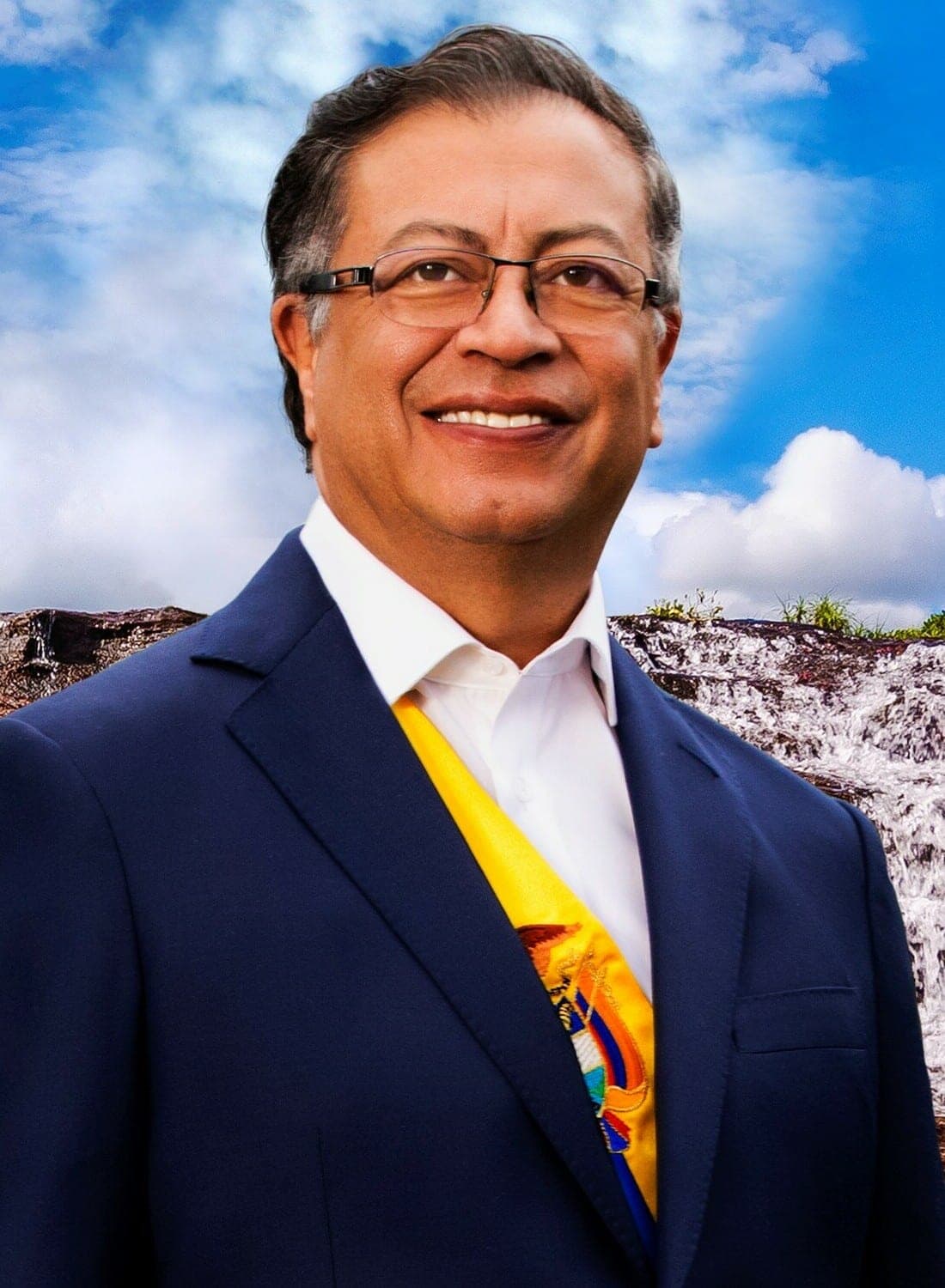
Colombia deserves better than what Gustavo Petro is doing to it on his way out the door.
On the evening of May 31, 2026, as Colombia's National Civil Registry began reporting first-round presidential results — far-right outsider Abelardo de la Espriella with 43.74% of the vote, and Petro's chosen successor, Senator Iván Cepeda, at 40.90% — the sitting president of the republic took to social media to do something no Colombian president had done before: reject an election result his side was losing.
"As president, I do not accept the results of the preliminary count," Petro wrote on X, alleging that software algorithms had been "altered three times" and that 800,000 phantom voters had been added to the electoral roll, according to ColombiaOne. He pledged to accept only the formal scrutiny process — the second-stage review conducted by judges of the Republic. Within days, that process concluded. It found a 99.94% agreement with the preliminary count, according to the National Civil Registry. The evidence of fraud that Petro promised simply was not there.
Petro has since doubled down anyway, claiming 885,000 voters were registered after a March 31 deadline, per UPI. He offered no verifiable evidence for this claim either.
The Institutions Push Back
Every competent authority that reviewed these elections reached the same conclusion. Colombia's National Registrar, Hernán Penagos, flatly rejected Petro's claims at their technical root: "The census is closed and frozen," he told Blu Radio. "There is no possibility [of adding more identification records], because the census is closed and then distributed across 122,000 polling tables." He added that Colombia's vote-counting process is essentially manual — there are no computers at polling tables — making the software-manipulation theory Petro promoted technically incoherent, according to ColombiaOne.
The European Union's Electoral Observation Mission, which deployed 143 observers across 591 polling stations, called the vote "transparent, orderly, and fluid." Mission chief Esteban González Pons hailed it as "a lesson in democracy," per Al Jazeera. Not a single one of the 12 candidates on the ballot brought fraud allegations to the mission's attention.
Even Cepeda, the candidate Petro was ostensibly trying to protect, backed away. By Monday, June 1, Cepeda admitted that his own monitors had not found "irregularities of a sufficient dimension to speak of fraud," according to ABC News/AP. Juanita Goebertus of Human Rights Watch wrote that Colombia has "an independent and reliable electoral system" and called it "regrettable that the President is sowing unjustified doubts."
Under Colombian law, election results are certified by judges — not by the president. Petro has no constitutional authority to accept or reject election results, a fact that legal observers immediately flagged as his statements emerged, per ColombiaOne.
The Pattern Behind the Gambit
This episode is not an aberration. It is the logical endpoint of a presidency that has consistently treated Colombia's democratic institutions as obstacles to be circumvented rather than structures to be respected.
Petro's government attempted to pass sweeping economic and social reforms that Congress repeatedly blocked — because he lacked a majority. Rather than building legislative coalitions, he declared a fiscal emergency by decree, invoking extraordinary powers. The Constitutional Court struck that decree down, per CEPR. The pattern — governing by decree when the legislature resists, then blaming institutions when the courts push back — has been a hallmark of his term.
Worse still is the corruption scandal that will define his administration's legacy. The National Unit for Disaster Risk Management (UNGRD) became the center of what prosecutors call the worst corruption case of the Petro era. Former Finance Minister Ricardo Bonilla and former Interior Minister Luis Fernando Velasco went on trial in April 2026, charged with leading a criminal organization that allegedly steered $161 million in public contracts to buy congressional votes for government legislation, per ColombiaReports. Former UNGRD directors admitted to the Supreme Court that they had diverted disaster relief funds to bribe congressional leaders, per Jurist. The former presidents of both the Senate and the House of Representatives are in prison. One senior official fled to Nicaragua; Nicaragua granted him asylum.
In March 2026, Colombian newspaper El Tiempo reported that the Petro government had awarded approximately 31 trillion pesos (roughly $8.5 billion) in direct contracts — without competitive bidding — to politically connected social organizations, per ColombiaOne. The Constitutional Court had already struck down the legal mechanism used to justify those contracts.
Total Peace: Total Failure
Petro's defining foreign policy promise — "Total Peace" — fares no better under scrutiny. ELN negotiations collapsed in January 2025 after guerrillas launched the Catatumbo massacre. Talks with the dominant FARC dissident faction (EMC), led by alias "Iván Mordisco," broke down entirely in 2024, when Mordisco walked away from the peace table and escalated attacks, including drone strikes on civilians, per Americas Quarterly. Rather than achieving peace, the strategy coincided with a dramatic growth in armed group membership — from roughly 6,500 combatants in 2017 to over 25,000 today, an increase of some 85%, per data from ACLED cited in Americas Quarterly.
The Congressional Research Service bluntly noted that ceasefires granted under Total Peace "may have bolstered the power of such groups and fueled violence," per a CRS brief published ahead of the election. Colombia remains the world's largest cocaine producer, and the administration's de-emphasis of coca eradication has coincided with record cocaine output.
A Presidency Ending With a Match in Its Hand
Now, in the final weeks before his August 7 handover, Petro is deploying officials to campaign for his successor in violation of Colombian law. The Inspector General's Office has opened investigations against the Colombian ambassador to Brazil, the director of the UNGRD (the agency already at the center of the corruption scandal), Colombia's Labor Minister, Interior Minister, and Transportation Minister — all for improper political activity in connection with the election, per ColombiaOne.
Columbia's election is, by multiple independent assessments, legitimate. The fraud narrative has been conclusively debunked by the very process Petro designated as authoritative. The runoff between De la Espriella and Cepeda will take place June 21.
What Petro is doing now — sowing doubt about democratic results he has no authority over and no evidence to challenge — carries real risk in a country long vulnerable to political violence. Observers have already drawn comparisons to January 6 in the United States and the Bolsonaro-inspired insurrection in Brazil. U.S. Senator Bernie Moreno, who observed the Colombian election in person, warned that Washington would not remain passive if Petro sought to override the democratic outcome, per ColombiaOne.
Colombia's institutions have held. The courts, the Registrar, the international observer corps, and ultimately even Petro's own candidate have confirmed the election's legitimacy. The question now is whether a president who has spent four years testing the limits of those institutions will damage them further on his way out — not through any evidence of fraud, but through the corrosive power of a president willing to say anything to keep his political project alive.