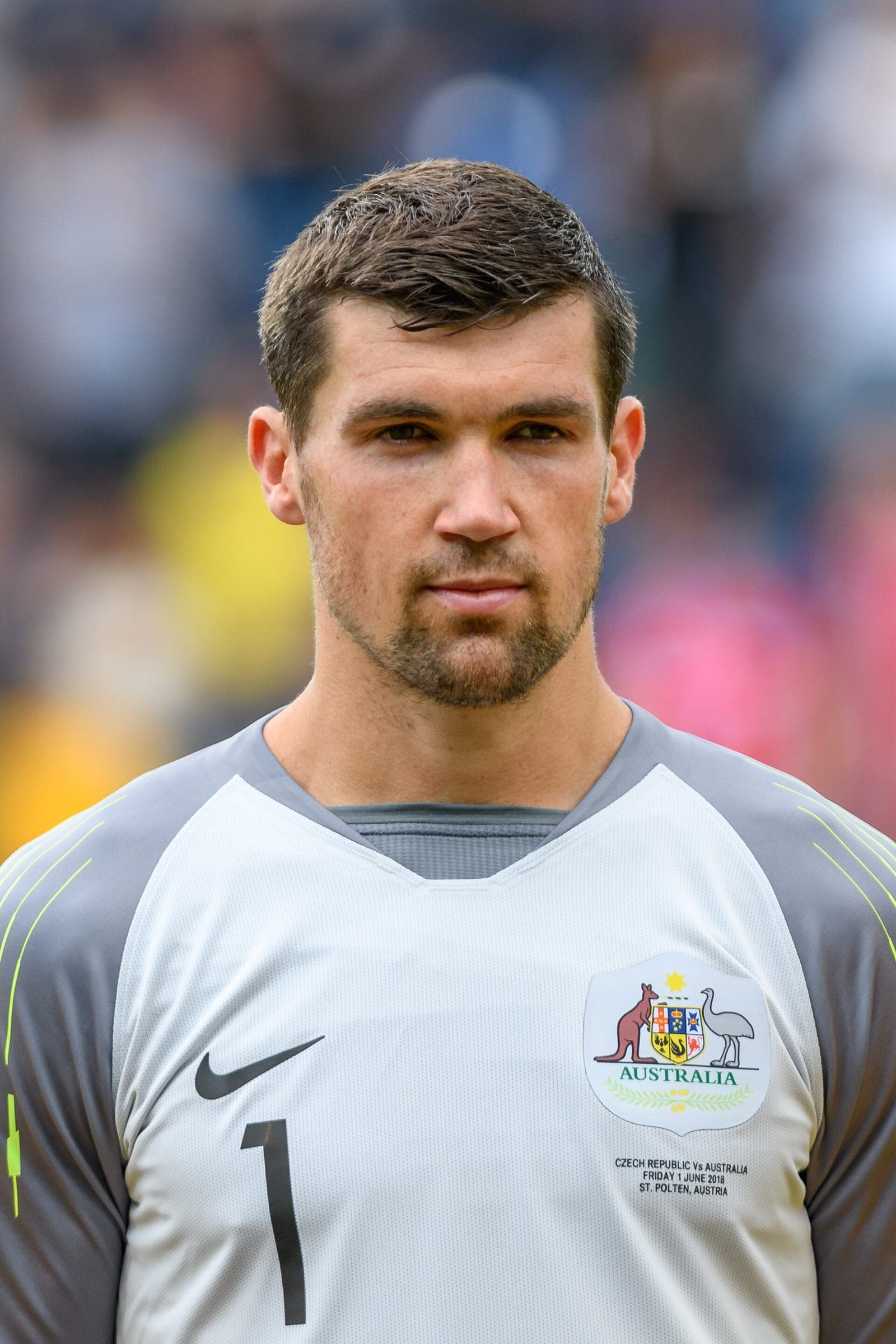
Australia begins its sixth consecutive World Cup against Türkiye in Vancouver on June 14 (AEST), and for once the draw has been kind. There is no Argentina, no France, no Brazil in the Socceroos' path — Group D is the rare World Cup pool without an elite seed. Ranked 27th in the world, Tony Popovic's side sit just five places below Türkiye and within striking distance of co-hosts the United States. "We are delighted to finally announce the 26 players who will represent the Socceroos," Popovic said on naming his squad. The opportunity is real. The margins are thin.
How open is Group D, really?
By the seedings, this is the most navigable group Australia has had in years. The four nations are tightly bunched: the United States sit 16th in the FIFA rankings, Türkiye 22nd, Australia 27th and Paraguay 40th. None is a traditional power. Crucially, the expanded 48-team format widens the door: the top two from each group advance to the Round of 32, and the eight best third-placed teams join them. That changes the calculus completely. In a 32-team World Cup, third place meant elimination; here it can be enough. As one preview put it, "Group D is tight, but still open enough to give us a chance" — a sentence that would have sounded delusional in most of Australia's previous groups.
| Team | FIFA ranking | Note |
|---|---|---|
| United States | 16 | Co-host |
| Türkiye | 22 | Australia's opener; 2002 finalist |
| Australia | 27 | Sixth straight World Cup |
| Paraguay | 40 | First World Cup since 2010 |
The three teams in Australia's way
Each opponent carries a different threat. The United States, ranked 16th, bring genuine home advantage as co-host — partisan crowds in Seattle, familiarity with the venues and conditions, and the deepest talent pool in the group. Türkiye, 22nd, are the wild card: a nation that reached the World Cup semi-finals — and a third-place finish — in 2002, but one whose qualification record since has been patchy. They are gifted and unpredictable, which makes the opener a genuine coin-toss rather than a gift. Paraguay, 40th and the lowest-ranked side in the group, are the most straightforward read but not an easy out: returning to a World Cup for the first time since 2010, they bring the obdurate, physical CONMEBOL streak that has long troubled technical sides. None is elite. None is a walkover.
How the Socceroos got here
Australia did not stumble into this tournament. They qualified automatically by finishing second behind Japan in Asian qualifying, sealing their place with a 2-1 win over Saudi Arabia and then beating Japan 1-0 — described as Australia's first victory over the Samurai Blue in 16 years. That late surge matters for two reasons. First, it is evidence that Popovic's group can grind out results against quality opposition, which is precisely the skill an open group rewards. Second, it built momentum and a defensive identity heading into a tournament where Australia will rarely be the more talented team on the pitch. A sixth straight World Cup appearance is itself a marker of consistency few nations of Australia's footballing size can match.
Why the fixture sequence matters
Order shapes everything at a World Cup, and Australia's runs in a logical arc. The Socceroos open against Türkiye at BC Place in Vancouver (June 14, 2:00pm AEST), then face the United States in Seattle (June 20, 5:00am AEST), before closing against Paraguay in Santa Clara (June 26, 12:00pm AEST). That sequence makes the opener decisive. Starting against the co-hosts would have invited an early hole; instead Australia gets its most winnable fixture first. Win, or at least avoid defeat, against Türkiye and the Socceroos control their own fate heading into the brutal middle game in Seattle, where a hostile crowd awaits. Lose the opener, and the maths tightens at once: a point against the United States becomes close to mandatory, and the Paraguay finale becomes a knockout in all but name.
A squad caught between two eras
This is a team in transition. Popovic named 26 players, but 17 are heading to their first World Cup — an unusually high turnover for a side long built on continuity. The spine remains experienced. Captain and goalkeeper Mat Ryan, now at Levante, is at his fourth World Cup, as is winger Mathew Leckie, whose goal against Denmark sent Australia through in 2022; the pair join Tim Cahill and Mark Milligan as the only Australian men to play in four. Jackson Irvine, of St Pauli, is the midfield leader, and Harry Souttar of Leicester City returns from injury to anchor the defence. "Some difficult decisions had to be made – that's the nature of major tournaments," Popovic said, having left out Martin Boyle (injured), goalkeeper Joe Gauci, defender Kye Rowles and forward Brandon Borrello.
The Volpato gamble
The squad's most intriguing inclusion is Cristian Volpato. The Sydney-born forward, who represented Italy at youth level, switched his allegiance to the Socceroos shortly before the deadline and took the final attacking slot. It is a calculated bet. Volpato is a creative, technically refined attacker of a type Australia has historically lacked — the player who can unlock a packed defence with a single pass — and his arrival hints at Popovic chasing an extra edge in the final third. The risk is obvious: he is largely untested at this level in green and gold, parachuted into a tournament squad rather than forged in qualification. In a group likely to be decided by fine margins, a difference-maker is exactly what Australia needs; whether Volpato is ready to be one is among the campaign's bigger unknowns.
Form, identity and the depth question
The warm-up evidence is mixed. Australia lost 1-0 to Mexico in a recent friendly, with a final tune-up against Switzerland to come before the opener — "Our focus now shifts to finalising our preparations for the upcoming friendly against Switzerland and for our World Cup group matches," Popovic noted. The Socceroos rarely overwhelm opponents; their model is defensive organisation, work rate and moments from the likes of Leckie or young Watford forward Nestory Irankunda, rather than sustained dominance. That identity has served Australia well — but it leaves little room for error. One analysis flagged the squad as "lacking in depth when compared to other squads at the tournament," and in a group where every opponent is organised and physical, the bench may decide as much as the starting eleven across three games in 13 days.
What does success actually look like?
The benchmark is clear: Australia has reached the Round of 16 twice, in 2006 and 2022, the latter ending in a 2-1 defeat to eventual champions Argentina. Matching that — escaping the group — is the realistic target, and the open draw plus the expanded format make it genuinely achievable rather than aspirational. The pathway is simple to describe and hard to execute: take care of Türkiye, steal something from the United States or Paraguay, and a top-two finish or a best-third berth is live. The danger is just as clear. A transitional squad, thin on depth and short of attacking certainty, cannot afford a slow start against opponents with, as one writer put it, "zero weak links." The draw has handed Australia a door rarely left this far ajar. The question that will define their tournament is whether this half-new team is ready to walk through it.