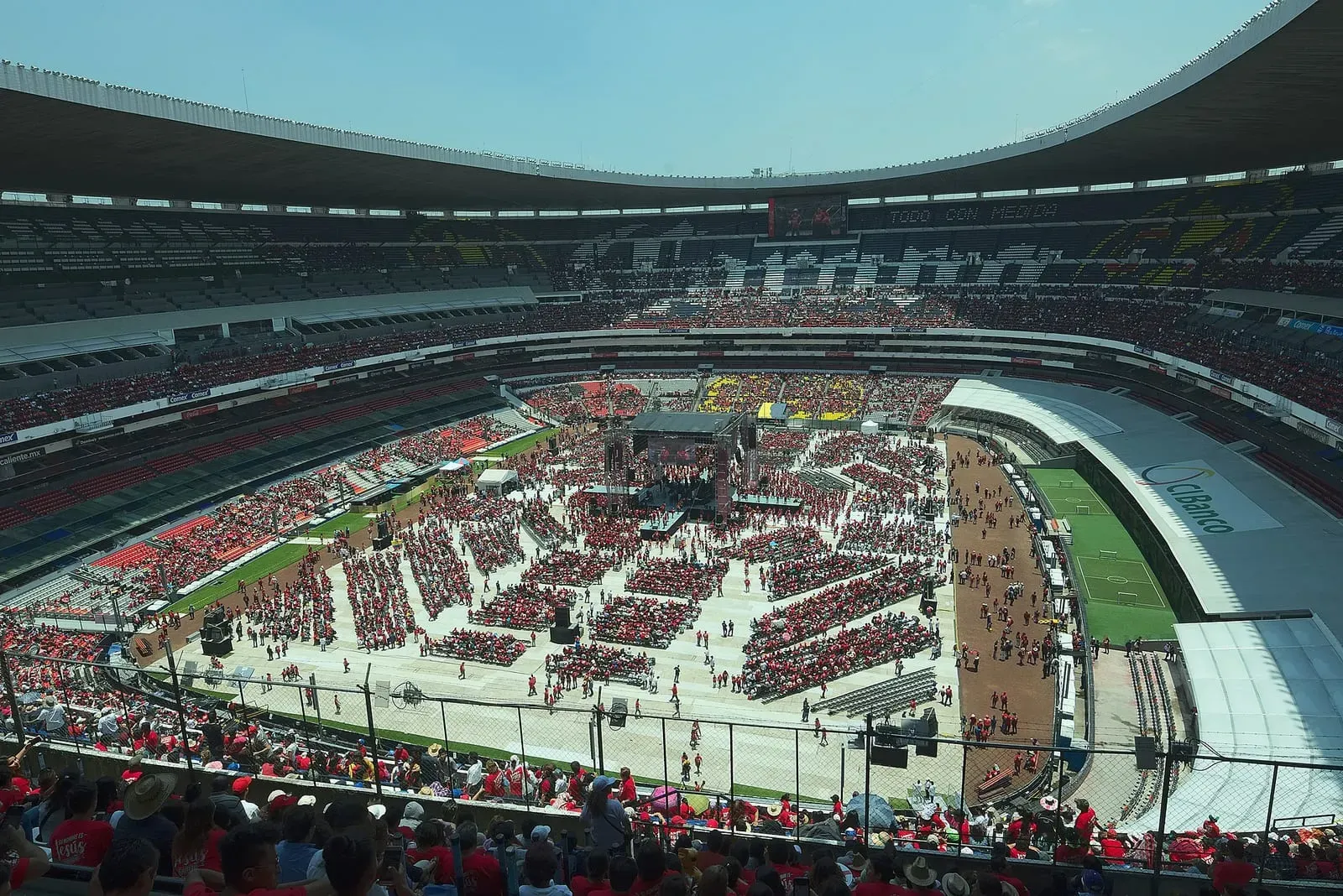
The largest World Cup in history began with a scoreline that flattered the contest and a disciplinary record that defined it. Co-hosts Mexico beat South Africa 2-0 at Estadio Azteca on Thursday, June 11, 2026 — a comfortable result on paper that obscured a chaotic, stop-start night in which Brazilian referee Wilton Sampaio brandished three red cards, the most ever shown in a World Cup opening match.
What happened in the World Cup opener?
Mexico settled the result early and late. Julian Quinones struck the first goal of the tournament inside nine minutes, pouncing after Sphephelo "Yaya" Sithole was dispossessed by Erik Lira near his own box and firing low through the legs of goalkeeper Ronwen Williams. The second arrived in the 67th minute, when Raul Jimenez rose unmarked to head home Roberto Alvarado's cross at the back post — Jimenez's first-ever World Cup goal at his fourth tournament, a moment that left the veteran striker in tears in tribute to his late father. A capacity crowd of 80,824[6]Mexico hosts South Africa in opening match as World Cup begins“With a capacity crowd of 80,824 watching at the iconic Azteca Stadium, co-host Mexico started the largest World Cup tournament in history ... South Africa players Sphephelo Sithole and Themba Zwane were both given red cards, forcing the team to finish with only nine players.” watched the co-hosts open the 48-team tournament, the first match of a competition staged across the United States, Canada and Mexico.
How did three red cards rewrite the record book?
The lasting story was not the football but the dismissals. South Africa lost two men and Mexico one, leaving Sampaio's match the most card-heavy opener in World Cup history. The previous record was two, set in 1990 when Cameroon had a pair sent off in the tournament's curtain-raiser — a match they still won 1-0 against defending champions Argentina.
| Min | Player | Team | Offense | | ------ | ------------------------ | ------------ | ----------------------------------------------------------- | | 50' | Sphephelo "Yaya" Sithole | South Africa | Denying a goalscoring opportunity (foul on Brian Gutierrez) | | 82' | Themba Zwane | South Africa | Striking Roberto Alvarado in the face (VAR review) | | 90'+2' | Cesar Montes | Mexico | Denying a goalscoring opportunity (foul on Khuliso Mudau) |
South Africa played the closing stretch with nine men; Mexico finished with ten after captain Cesar Montes was dismissed deep into stoppage time.
Why was the Zwane dismissal the flashpoint?
The turning point came in the 82nd minute, when substitute Themba Zwane caught Alvarado in the face while contesting a loose ball. Sampaio was sent to the pitchside monitor, reviewed the swipe and produced South Africa's second red — what Sky Sports[2]World Cup 2026: Mexico 2-0 South Africa as co-hosts win opener in game of three red cards“Sithole's pocket is picked on the edge of his own box, allowing Quinones to fire home the first goal of the World Cup ... In the first controversial call of the tournament, referee Wilton Sampaio sent Zwane off too.” called "the first controversial call of the tournament." It was the night's clearest demonstration of VAR's reach: an off-the-ball flashpoint, missed in real time, upgraded to a sending-off on review. With Sithole already gone for hauling down Gutierrez when through on goal, Zwane's dismissal effectively ended the contest as a competition, reducing Bafana Bafana to nine and removing any route back into a match they had, at 1-0, still been within reach of.
What did Hugo Broos make of it?
South Africa head coach Hugo Broos accepted the first red but disputed the second. "I think the Mexican player blocked my player, that happens, the referee decides something else," he said of the Zwane decision, adding: "So this is a little bit pity that we have to finish this game with nine players." Broos was adamant the performance did not deserve the scoreline. "I think my team played a good game, some moments in the game, Mexico was even desperate," he said. His sharper verdict was reserved for the goals: "Two times a mistake from our side, two times on a moment we don't have to lose the ball, we lost the ball and immediately there was space for Mexico, and they could score two times." Both Mexican goals flowed directly from South African turnovers in dangerous areas.
What did the win mean for Mexico?
For the co-hosts, the result delivered exactly what a host nation needs from a nervy opener: three points and a clean sheet. Quinones's strike was the earliest goal to open a World Cup since 2006, and Jimenez's header capped a long-awaited personal milestone. The mood in the Mexico camp was reverent. "It was an experience unlike any other," said midfielder Israel Reyes, calling it "the pinnacle of something I had been hoping for.[4]Mexico beat South Africa in 2026 World Cup opener at the Azteca“Israel Reyes: 'It was an experience unlike any other ... the pinnacle of something I had been hoping for.' Eric Lira: 'We tried to do our job and give it our best ... 11 Mexicans representing 180 million people.'”" Erik Lira, who won the ball for the opener, framed the occasion in national terms: "We tried to do our job and give it our best — 11 Mexicans representing 180 million people." The one blemish was Montes's stoppage-time dismissal, which leaves the captain facing suspension for Mexico's next group fixture.
What comes next?
Both sides have two group games left to shape their campaigns, and both must now manage the fallout from the cards. Straight red cards ordinarily carry at least a one-match suspension, meaning Sithole, Zwane and Montes are each in line to miss their nation's next outing pending FIFA[10]Mexico v South Africa — Match Centre“Official match record for Mexico v South Africa, 11 June 2026.”'s disciplinary review. For South Africa, returning to a major World Cup after a long absence, the concern is not the 2-0 margin — which Broos insists overstated Mexico's superiority — but the indiscipline that turned a competitive opener into a rout. For Mexico, the takeaway is a winning start under heavy expectation, with the harder questions deferred to the next match.