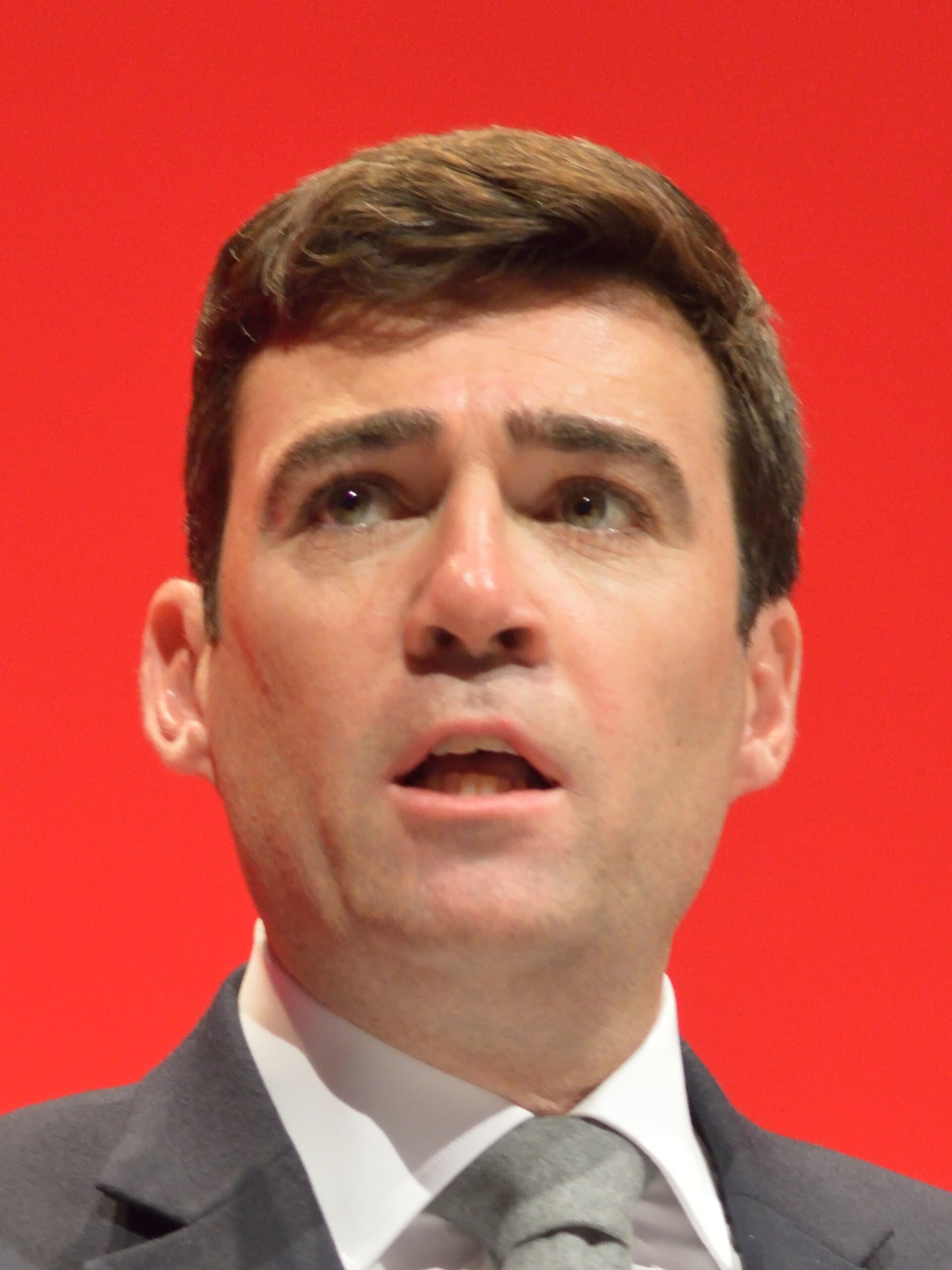
Sometime on the morning of June 24, 2026, the last plausible brake on Andy Burnham's uncontested path to Downing Street was released. Darren Jones, Chief Secretary to the Prime Minister and the figure most often named as a credible alternative candidate, told Sky News political editor Beth Rigby two words that sealed it. "I'm not"[1]Darren Jones Says He Won't Challenge Andy Burnham To Become Prime Minister“Jones confirmed to Sky News he would not run for the Labour leadership, telling political editor Beth Rigby: 'I'm not.' He said 'upwards of 100' Labour MPs have concerns about Burnham becoming PM without a contest.” — he was not going to run.
With Jones out, the arithmetic for any challenger collapses. Former Armed Forces Minister Al Carns is still hovering near the starting line, but he needs 81 Labour MP nominations to get onto the ballot. Without an established parliamentary base and with Jones — who drew a distinct faction — now standing down, Carns has no credible route to that threshold[9]Is Al Carns the man to take on Andy Burnham in Labour leadership race?“Carns told the Foreign Press Association he would not rule himself out because he wanted to 'trigger the debate' and push policy ideas to make the system 'as bold and courageous as we can be.'”. The result: Britain will almost certainly have its next prime minister by July 17, 2026, chosen by a party machine rather than a public vote, without a single contested debate.
The cruelty of the timing is that the clearest measurement of what the British public actually wanted on this question arrived on the very day Jones stood aside.
What does the public actually think of an uncontested succession?
New Ipsos polling conducted June 19-22, 2026, among 1,131 British adults found 39% of Britons wanted a Labour leadership contest, compared with only 13% who wanted Burnham to take over without a challenge[2]Andy Burnham seen as most likely to do a good job as Prime Minister“39% of Britons prefer a contest; 13% want a Burnham coronation; 61% not confident Labour can provide strong and stable leadership. Fieldwork June 19-22, 2026, n=1,131.”. A further 19% said Keir Starmer should not resign at all. In other words, the path Labour has chosen — a swift, uncontested coronation — was the explicit preference of fewer than one in eight British citizens.
Ipsos poll: Britain on the Burnham succession (June 19-22, 2026)
- 39% want a Labour leadership contest before any new PM is named
- 13% want Burnham to take over without a challenge
- 61% not confident Labour can provide strong and stable leadership
- 35% think Burnham would do a good job as PM; 24% say he would do badly
- 42% think Labour more likely to win the next election with Burnham than with Starmer (7%)
Given that 6 in 10 lack confidence that Labour can offer strong and stable leadership, there is work to do for the expected incoming Prime Minister to show that Labour has the answers for the long term.
Keiran Pedley, Ipsos Director of Politics
That confidence deficit is not a minor finding. In January 2024 — before the last general election — 39% of Britons said they were confident Labour could provide strong and stable leadership[2]Andy Burnham seen as most likely to do a good job as Prime Minister“39% of Britons prefer a contest; 13% want a Burnham coronation; 61% not confident Labour can provide strong and stable leadership. Fieldwork June 19-22, 2026, n=1,131.”. By June 2026, that figure had collapsed to 29%. Labour is handing its chosen successor a party whose authority with the public has degraded sharply over two years — and doing so without allowing the leadership contest that might at least have conferred internal legitimacy on the transition.
Why is the phantom challenger unable to challenge?
Jones, in ruling himself out, was at least honest about what Labour's backrooms were doing. He told Sky News that "upwards of 100" Labour MPs had concerns about Burnham becoming PM without a contest[1]Darren Jones Says He Won't Challenge Andy Burnham To Become Prime Minister“Jones confirmed to Sky News he would not run for the Labour leadership, telling political editor Beth Rigby: 'I'm not.' He said 'upwards of 100' Labour MPs have concerns about Burnham becoming PM without a contest.” — but concluded that Burnham would win any members' vote regardless, making a challenge purely transactional. His withdrawal, Jones insisted, was not ideological surrender but arithmetic pragmatism.
Carns, for his part, published a lengthy social media post on June 24 laying out five tests he said "anyone asking to lead our country" should pass: defence spending at 3% of GDP as "the floor, not the ceiling," fixing youth unemployment, adding £1 trillion to UK GDP within a decade, 10% improvement targets across public services, and domestic energy from the North Sea[3]Al Carns hints at Labour leadership run as he sets out five tests for next Prime Minister“Carns published five tests on June 24, 2026, declining to rule out a challenge, including defence spending at 3% of GDP as 'the floor, not the ceiling' and adding £1 trillion to UK GDP within a decade.”. He stated that if the debate "ever becomes a contest, it should be fought on this ground, not on personalities."
Carns told the Foreign Press Association he would not rule out a challenge because he wanted to "trigger the debate" and push policies to make the system "as bold and courageous as we can be"[9]Is Al Carns the man to take on Andy Burnham in Labour leadership race?“Carns told the Foreign Press Association he would not rule himself out because he wanted to 'trigger the debate' and push policy ideas to make the system 'as bold and courageous as we can be.'” — but without 81 MP nominations, debate is all he can trigger. It was a quasi-manifesto without a candidate: an admission that the only man willing to articulate these demands cannot actually stand.
How does the NEC timetable make scrutiny structurally impossible?
The Labour NEC confirmed a timetable in which MPs may nominate candidates between July 9 and July 15, a single hustings takes place on July 13, trade union affiliates have a one-day window from 6 p.m. July 15 to 6 p.m. July 16 to nominate, and the special conference confirming the result is scheduled for July 17[8]Timetable for leadership contest confirmed by NEC“NEC confirmed nominations run July 9-15; hustings July 13; union affiliates nominate July 15-16; special conference to confirm the result on July 17. If Burnham is the only candidate, he is expected to become PM the same day.”. If Burnham is the only candidate, as is now widely anticipated, he enters Downing Street the same day.
This is a process designed for speed, not scrutiny. Under Labour's rules, a candidate must be supported by 20% of members of the Parliamentary Labour Party — currently 81 of 403 Labour MPs — as well as 5% of constituency Labour parties or at least three affiliates including two trade unions[10]What are Labour's rules for a leadership contest after Starmer's resignation?“Nominations to be a candidate must be supported by 20% of members of the Parliamentary Labour Party — equal to 81 MPs — as well as 5% of CLPs or at least three affiliates including two trade unions.”. A candidate who cannot reach those thresholds cannot proceed to a members' ballot at all.
The Institute for Government notes that when a Labour leader resigns a contest is automatically triggered — but "if there is only one leadership contender the process could be over much more quickly" than the September 1 deadline[11]How do Labour Party leadership contests work?“If there is only one leadership contender the process could be over much more quickly than the September 1 deadline; a contest is automatically triggered when a Labour leader resigns.”. The party's rulebook does not require a members' ballot if no second candidate clears the threshold. The contest is real in form and absent in substance.
What is Burnham promising — and what remains unknown?
Burnham's first full economic speech was not expected until the week of June 29 — 10 days before nominations open. His disclosed positions, assembled from a string of media appearances, include reviewing employer national insurance contribution increases, potentially raising the personal income tax allowance, cutting pub business rates by 20%[10]What are Labour's rules for a leadership contest after Starmer's resignation?“Nominations to be a candidate must be supported by 20% of members of the Parliamentary Labour Party — equal to 81 MPs — as well as 5% of CLPs or at least three affiliates including two trade unions.”, and supporting Thames Water nationalisation. He has explicitly ruled out raising income tax, VAT, or employee national insurance rates[5]What would Andy Burnham do if he becomes Prime Minister?“Burnham told The Guardian he ruled out a snap election: 'Calling a general election? I'm sorry, I think there's a limit to how much time people want people to be on their doorsteps.' He also pledged not to raise income tax, VAT, or employee NIC rates.”.
But on the central economic questions — what he cuts, what he borrows, who pays for defence — Burnham has been conspicuously vague. Lord Jim O'Neill, Burnham's key economic adviser and former Goldman Sachs chief economist, told LBC there was a "very strong probability" of devolving business rates and suggested the overall scale of fiscal devolution would represent "constitutional devolution" under a Burnham government[12]Burnham ally says shift of power from London is 'badly needed' and says business rates devolution is 'very strong probability'“Lord Jim O'Neill, Burnham's key economic adviser, told LBC: 'Business rates devolution is a very strong probability' and described the scale of proposed fiscal devolution as 'constitutional devolution.'”. That is a significant fiscal shift — but it has emerged via a peer on a radio programme, not through a prime-ministerial economic address.
What is Starmer doing while this unfolds?
Meanwhile, Starmer is pressing ahead with a constitutionally contested act. Defence Secretary Dan Jarvis confirmed on June 23, 2026, that he was "working to finalise and publish the DIP before I travel to Ankara with the Prime Minister" for the NATO summit on July 7-8, despite Burnham allies urging Starmer to hold off[4]The Defence Investment Plan won't save Starmer's legacy“DIP negotiations are 'down to the wire,' with Jarvis pushing for more than the £13.5 billion Reeves is reportedly prepared to give the MoD. Defence Secretary Jarvis confirmed on June 23 he was 'working to finalise and publish the DIP before I travel to Ankara.'”. Government convention dictates that caretaker administrations must not make new spending commitments. Starmer is arguing the Defence Investment Plan constitutes an existing commitment — a lawyerly distinction with enormous fiscal consequences.
Negotiations are reportedly "down to the wire," with Jarvis pushing for more than the £13.5 billion Chancellor Reeves is reportedly prepared to give the Ministry of Defence[4]The Defence Investment Plan won't save Starmer's legacy“DIP negotiations are 'down to the wire,' with Jarvis pushing for more than the £13.5 billion Reeves is reportedly prepared to give the MoD. Defence Secretary Jarvis confirmed on June 23 he was 'working to finalise and publish the DIP before I travel to Ankara.'”. Burnham has said he supports borrowing outside fiscal rules to fund defence but has given no commitment on how much.
Britain is, in short, about to gain a prime minister whose economic plans are still being drafted, whose defence position is contingent on a plan he opposed being published, who has explicitly ruled out asking the public whether they want him in office[5]What would Andy Burnham do if he becomes Prime Minister?“Burnham told The Guardian he ruled out a snap election: 'Calling a general election? I'm sorry, I think there's a limit to how much time people want people to be on their doorsteps.' He also pledged not to raise income tax, VAT, or employee NIC rates.”, and who arrives with the backing of 13%[2]Andy Burnham seen as most likely to do a good job as Prime Minister“39% of Britons prefer a contest; 13% want a Burnham coronation; 61% not confident Labour can provide strong and stable leadership. Fieldwork June 19-22, 2026, n=1,131.” of the country on the method of his selection. That is not a mandate. It is an inheritance, delivered by a machine, to a man who has not yet decided what to do with it.
| Indicator | Figure | Source |
|---|---|---|
| Britons wanting a contest | 39% | Ipsos, June 2026 |
| Britons wanting Burnham coronation | 13% | Ipsos, June 2026 |
| Not confident Labour can provide stable leadership | 61% | Ipsos, June 2026 |
| Labour MPs with concerns (per Jones) | "Upwards of 100" | Jones to Sky News |
| MP nominations needed to get on ballot | 81 | Labour rulebook |
| Burnham PM date (if uncontested) | July 17, 2026 | NEC timetable |