On the morning of June 22, 2026, Keir Starmer stepped to a lectern on the Downing Street pavement and did what all his predecessors in a decade of failure had done before him: he quit. "I have heard the answer of my parliamentary party to that question, and I accept that answer with good grace,"[3]UK Prime Minister Keir Starmer announces resignation with 'good grace'“Starmer said outside 10 Downing Street: "I have heard the answer of my parliamentary party to that question, and I accept that answer with good grace."” he told the cameras, two years after Labour's landslide. Another prime minister gone, an unelected mandate handed onwards, the carousel spinning once more.
This was not a verdict of the British people. It was a verdict of a party machine — and the machinery was ruthless, choreographed, and constitutionally dubious in a way that has been underplayed in the coverage celebrating Burnham's ascent.
How Did Starmer Fall So Far, So Fast?
The collapse was real and total. Starmer's net approval rating averaged −46% by November 2025[7]Keir Starmer“Starmer's net approval rating began slightly positive, falling to an average of −46% by November 2025; an Ipsos poll that month indicated he was the least popular prime minister since its records began in 1977.”, the worst reading since Ipsos began tracking prime ministers in 1977. By January 2026, YouGov found 75% of Britons held an unfavourable view of him, a net favourability of −57 matched only by Liz Truss. At the 2026 local elections, Labour lost control of 35 councils and nearly 1,500 councillors[5]2026 Labour Party leadership crisis“At the 2026 local elections, Labour lost control of 35 councils and nearly 1,500 councillors; Labour's projected national vote share was 17%.” — roughly 60% of the seats it was defending — with Labour's projected national vote share at just 17%[5]2026 Labour Party leadership crisis“At the 2026 local elections, Labour lost control of 35 councils and nearly 1,500 councillors; Labour's projected national vote share was 17%.”, in joint third with the Conservatives.
Cabinet resignations came in waves. Health Secretary Wes Streeting quit on May 14. Defence Secretary John Healey followed on June 11. Safeguarding Minister Jess Phillips also walked.
Starmer's failures are not in dispute. But how he was removed — and who removed him — is a scandal the commentariat has been too dazzled by Burnham's personal popularity to examine.
The Scale of Labour's Collapse
- −46% Starmer's average net approval rating by November 2025 (Ipsos)
- −57 net favourability by January 2026 (YouGov)
- 17% Labour's projected national vote share at the 2026 local elections
- ~1,500 Labour councillors lost in the 2026 local elections
- 35 councils where Labour lost control
- 7 UK prime ministers in 10 years if Burnham takes over
What Happened in Makerfield Is a Constitutional Scandal
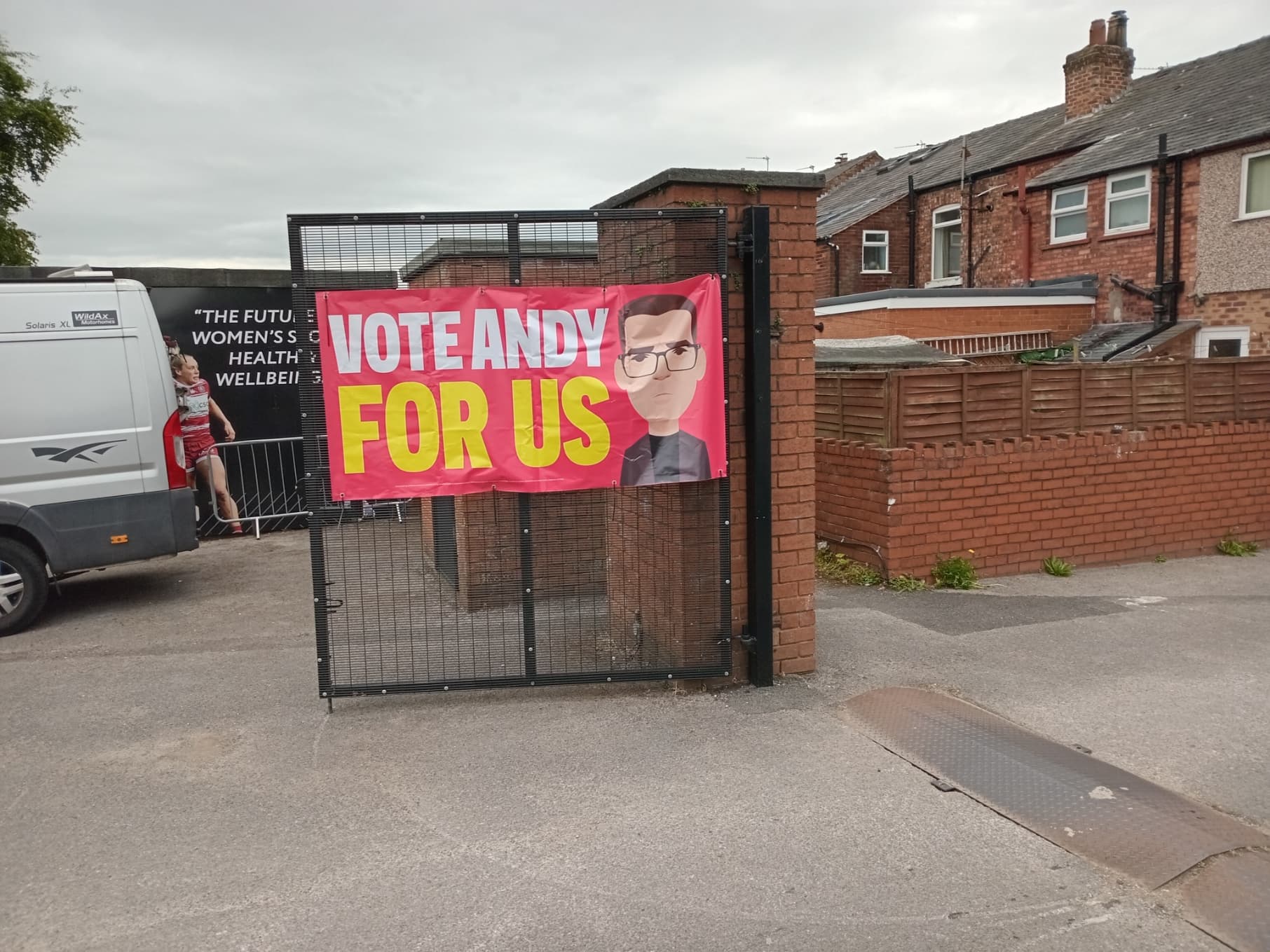
On May 14, 2026, Josh Simons — the Labour MP for Makerfield, elected less than two years earlier — resigned his parliamentary seat specifically to allow Andy Burnham to contest the resulting by-election and seek the Labour leadership[10]How do Labour Party leadership contests work?“Josh Simons stood down as the Labour MP for Makerfield to allow Andy Burnham to contest the by-election in the hopes of opening a path for Burnham to become an MP and trigger a potential party leadership challenge.”. It was the first time since the 1965 Leyton by-election that a parliamentary vacancy was deliberately created to provide a seat for an individual not currently in Parliament[6]2026 Makerfield by-election“It was the first time since the 1965 Leyton by-election that a by-election was triggered specifically to provide a vacancy for an individual not currently in Parliament.”.
The voters of Makerfield — a working-class constituency in the Wigan borough — did not choose this. They elected Simons in 2024 to represent them for up to five years. He was instead deployed as a constitutional pawn, vacating his mandate so that the Labour Party could insert its preferred prime minister-in-waiting. Burnham was confirmed as Labour's candidate by the NEC without local party members being given a vote on his selection[6]2026 Makerfield by-election“It was the first time since the 1965 Leyton by-election that a by-election was triggered specifically to provide a vacancy for an individual not currently in Parliament.”, bypassing the standard process entirely.
The choreography is exquisite in its contempt. A man elected by real people, in a real constituency in the real Wigan, stands aside so that the party machine can insert its preferred Prime Minister-in-waiting.
GB News, May 2026
Burnham won the June 18 by-election with 54.8% of the vote and a majority of 9,241[1]Makerfield By-Election 18 June 2026: Polls, Candidates“Burnham (Lab) 54.8% (24,937), Kenyon (Reform UK) 34.5%, turnout 58.75%, Labour majority 9,241 votes.”, with turnout at 58.8%. His victory was real. The question is whether the process that manufactured it was acceptable.
Why This Could Be the Weakest Democratic Mandate in Modern British History
If Burnham becomes Labour leader and — as the party's rules provide — prime minister without a general election, he will join a long list of predecessors who inherited Downing Street without asking the country. Gordon Brown in 2007. Theresa May in 2016. Boris Johnson in 2019. Liz Truss in 2022. Rishi Sunak in 2022. Starmer, by contrast, at least won a general election, however modest his popular vote share.
Nominations for the Labour leadership are expected to open on July 9 and close on July 16, with a leader to be elected by Sept. 1 if a contested election is held[2]2026 Labour Party leadership election (UK)“Nominations are expected to open on 9 July and close on 16 July, with a leader to be elected by 1 September if a contested election is held.”. If Burnham is uncontested, he could be confirmed as leader — and prime minister — before Parliament returns from its summer recess, without a single vote cast by the general public. He had the support of more than 200 Labour MPs by June 20[2]2026 Labour Party leadership election (UK)“Nominations are expected to open on 9 July and close on 16 July, with a leader to be elected by 1 September if a contested election is held.”. This is an overwhelming parliamentary majority — and, from any democratic standpoint, irrelevant to the 67 million people who live in Britain.
This will be the third Labour leadership election conducted while the party is in government[2]2026 Labour Party leadership election (UK)“Nominations are expected to open on 9 July and close on 16 July, with a leader to be elected by 1 September if a contested election is held.”, following 1976 and 2007. In both previous cases, the new leader — James Callaghan, then Gordon Brown — declined to call an immediate election and was eventually punished for it by voters. History is not kind to unelected prime ministers who mistake a party mandate for a popular one.
What the Data Actually Says About Why Labour Lost
Before the political class declares Burnham the saviour, it should wrestle with one uncomfortable finding buried in the post-mortems: in England, just 5% of those who voted Labour in 2024 switched to Reform, while 32% switched to the Greens or the Liberal Democrats[5]2026 Labour Party leadership crisis“At the 2026 local elections, Labour lost control of 35 councils and nearly 1,500 councillors; Labour's projected national vote share was 17%.”.
The dominant narrative — that Reform's rise represents a working-class revolt requiring a pitch to "red wall" voters — may be analytically backwards. The larger haemorrhage has been progressive voters fleeing to parties on Labour's left and centre-left. Burnham's pitch to northern, post-industrial communities is genuine and may win back some ground. But it addresses the symptom rather than the cause.
The risk is that a Prime Minister Burnham, governing without an electoral mandate, pursues an agenda calibrated to win back voters Labour never actually lost in bulk — while the 32% who defected to the Greens and Lib Dems conclude that Labour under new management is simply Starmerism with a better accent.
The Pattern Must End
Britain has now churned through, or is about to churn through, seven prime ministers in 10 years. The country has been governed by party machines, not by the people.
The answer is not simply "call an election" — a new Labour leader will rightly argue they need time to establish a government. But the democratic accountability deficit in British politics has reached a point where institutional reform, not just a change of personnel, is urgently required. Term limits on mid-parliament leadership changes, stronger recall mechanisms for MPs who resign manufactured seats, stricter rules on NEC candidate imposition — these are conversations Britain has been too distracted by the leadership carousel to have.
Andy Burnham may well be a better prime minister than Keir Starmer. He could hardly be more unpopular. But the manner in which he has been elevated — through a manufactured by-election, a bypassed local selection, and a parliamentary party coup — should trouble every British voter regardless of their politics. The residents of Makerfield did not vote for this. Neither did the rest of the country.