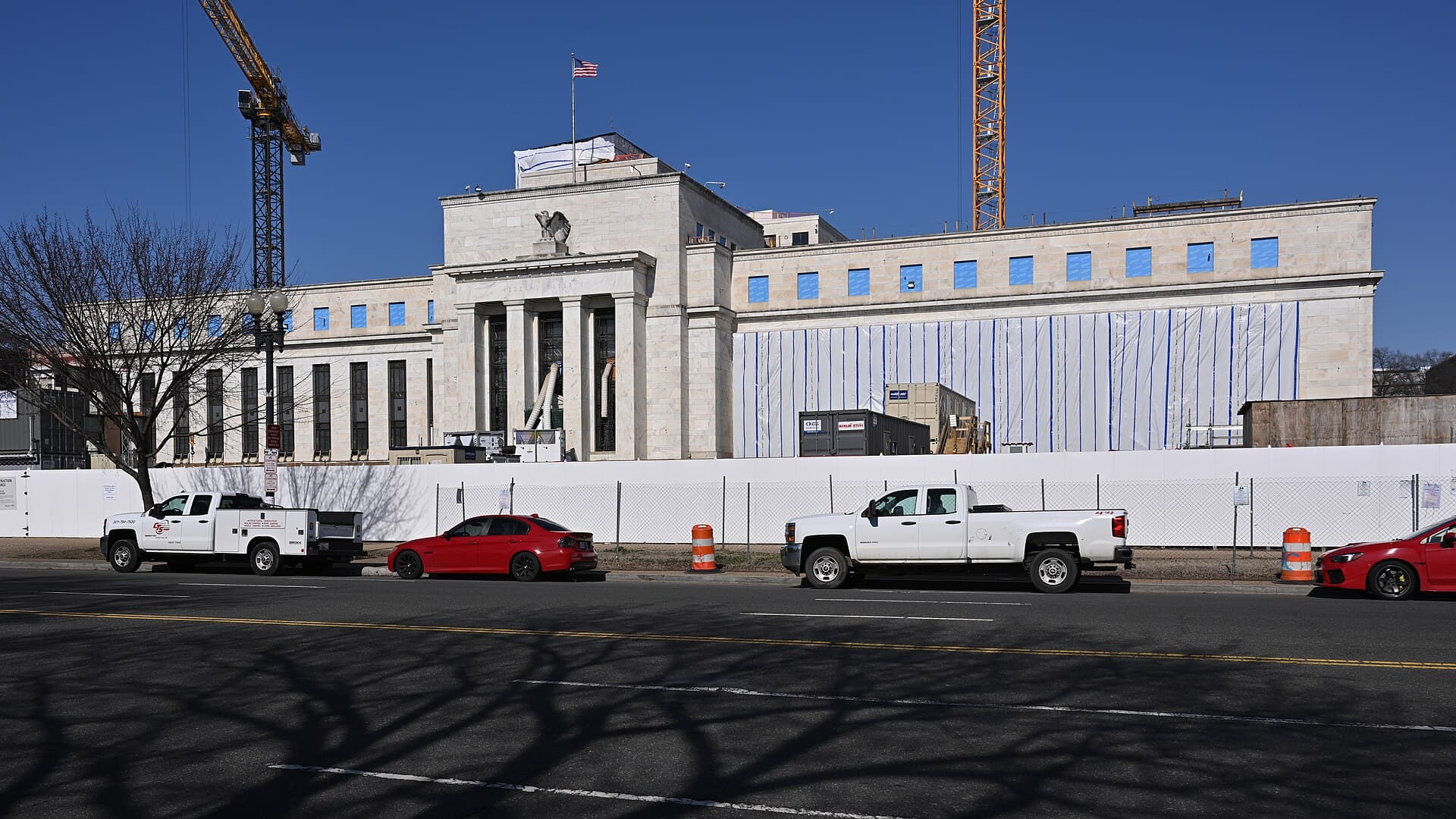
Global equities logged their best two-day run of 2026 this week after the United States and Iran announced a ceasefire on June 14 calling for the immediate reopening of the Strait of Hormuz — a waterway whose months-long disruption had driven the largest oil-supply shock in years. The news sent crude prices tumbling, pushed stock markets to record levels, and altered the inflation calculus heading into the most consequential Federal Reserve meeting in years.
On June 15, the Dow Jones Industrial Average gained 469 points to close at a record 51,671, the S&P 500 rose 1.7%, and the Nasdaq Composite surged 3.1% — its best single session since March 31. Gains extended further on June 16: the S&P 500 rose an additional 1.83% to 7,567, the Nasdaq climbed 2.87% to 26,631, and the CBOE Volatility Index fell to 16.13 — down sharply from the prior week's peak above 23.
Week at a glance
- +469 pts — Dow gain June 15, closing at a record 51,671
- +3.1% — Nasdaq gain June 15 (best session since March 31)
- -5% — WTI crude oil drop to ~$80/barrel on June 15–16
- 4.2% — May 2026 CPI year-over-year (highest in three years)
- 3.50%–3.75% — Fed funds target, on hold since December 2025
- $75B — SpaceX Nasdaq IPO proceeds (largest IPO in Wall Street history, June 12)
What did the US-Iran deal announce, and how did markets respond?
President Trump announced the deal Sunday on Truth Social, writing that "The Deal with the Islamic Republic of Iran is now complete," authorizing the toll-free reopening of the Strait of Hormuz. Iran's Supreme National Security Council confirmed the agreement.
Asian markets moved first. Japan's Nikkei 225 surged more than 5%, South Korea's Kospi jumped 5.7%, and U.S. crude fell to its lowest since mid-April.
| Index / Asset | June 12 close | June 15 | June 16 (intraday) |
|---|---|---|---|
| S&P 500 | 7,394 | +1.70% | 7,567 (+1.83%) |
| Dow Jones | 50,848 | +469 pts — record 51,671 | 51,888 (+1.34%) |
| Nasdaq | 25,809 | +3.10% | 26,631 (+2.87%) |
| WTI Crude ($/bbl) | $85.36 | −5.0% | $80.27 (−5.43%) |
| VIX | 19.44 | ~−16% | 16.13 (−8.77%) |
Sources: Charles Schwab, Trading Economics, Yahoo Finance
Not every name benefited. Fox Corporation (FOXA) tumbled roughly 15% after announcing a $22 billion acquisition of Roku at $160 per share in a cash-and-stock deal, with an expected $400 million in run-rate cost synergies and a projected close in the first half of 2027. Existing Fox shareholders would own roughly 73% of the combined company.
Meanwhile, SpaceX (Nasdaq: SPCX) continued to climb following its June 12 record Nasdaq debut, which raised $75 billion at a $1.77 trillion valuation — the largest IPO in Wall Street history, with shares trading at $177.99 on June 15, up from an IPO price of $135.
Why does the oil-price collapse matter for US inflation?
The ceasefire removes the dominant driver behind the hottest U.S. inflation reading in three years. The Bureau of Labor Statistics reported June 10 that the Consumer Price Index rose 0.5% in May and 4.2% year-over-year — up sharply from April's 3.8%. Stephens analysts noted that gasoline alone surged 7.0% in May and overall energy prices rose 3.9%, accounting for the vast majority of the monthly CPI increase. In contrast, core CPI — which excludes food and energy — rose just 0.2% in May, below the 0.3% consensus forecast, and 2.9% annually.
The fall in oil prices will provide some relief for central banks around the world who were worried about the inflation outlook. Focus now turns to the US Federal Reserve, which decides on interest rates this week.
Khoon Goh, head of Asia research, ANZ Bank
If oil prices hold near $80, energy's contribution to CPI could reverse sharply in June and July data — potentially allowing the Fed to maintain its hold without escalating to a rate hike.
What will the FOMC decide, and why does the dot plot matter?
CME's FedWatch tool showed a 98.2% probability the Fed will hold its target range at 3.50%–3.75% on June 17, keeping it unchanged for at least the fourth consecutive meeting. The rate decision itself holds little suspense. The real market event is the quarterly Summary of Economic Projections — the dot plot — and Warsh's inaugural press conference at 2:30 p.m. ET on June 17.
In March, the median dot pointed to a single rate cut in 2026. With headline CPI having since risen to 4.2%, analysts broadly expect the June dot plot to show zero cuts this year. Goldman Sachs has pushed its expected rate-cut timeline to 2027, and a Bloomberg survey found economists expect rates to hold through mid-2027. At the same time, VT Markets data showed a 42.3% market-implied probability that rates could rise to 3.75%–4.00% by December 2026 — a tail risk that may shrink if the oil-price reversal proves durable.
J.P. Morgan Chase's investment strategy team noted the meeting would "likely" produce "an explicit move away from a bias toward easing to a neutral stance on rates" — a language shift that could itself move bond markets. The April 28–29 FOMC meeting produced four dissenting votes — the most since October 1992, illustrating the divided committee Warsh now must manage.
Who is Kevin Warsh, and what are his priorities?
Warsh was confirmed by the Senate 54-45 — the most divisive Fed chair confirmation in the modern era — and was sworn in as Fed chairman on May 22. At his confirmation hearing, he said he wanted "messier meetings" where policymakers could have "a good family fight" — signaling a more debate-driven process than his predecessor's. He has also expressed interest in shrinking the Fed's $6.6 trillion balance sheet and reducing forward guidance. At his swearing-in, Warsh pledged a "reform-oriented Federal Reserve".
From Strait disruption to ceasefire: key dates
- February 2026 — US-Israel military campaign against Iran disrupts the Strait of Hormuz; energy shock begins
- April (early) — WTI crude tops $112/barrel; first two-week ceasefire is reached
- April 28–29 — FOMC holds at 3.50%–3.75%; 8-4 vote marks most dissents since October 1992
- May 12 — Senate confirms Kevin Warsh as Fed chair, 54-45
- May 22 — Warsh sworn in as Fed chairman at the White House
- June 10 — BLS: May CPI 4.2% year-over-year (highest in three years); gasoline +7.0% month-over-month
- June 12 — SpaceX (SPCX) lists on Nasdaq at $135/share, raising a record $75 billion
- June 14 (Sunday) — Trump announces US-Iran ceasefire; Strait of Hormuz to reopen; Fox Corp announces $22 billion Roku acquisition
- June 15 — Dow +469 pts to record 51,671; Nasdaq +3.1%; WTI crude −5%
- June 16–17 — Warsh chairs first FOMC meeting; rate decision at 2 p.m. ET June 17; dot plot and press conference follow
The Bank of Japan is also meeting this week, with a rate hike widely expected, adding an international dimension to an unusually dense central-bank calendar. The next U.S. CPI release, covering June, is scheduled for July 14, 2026.