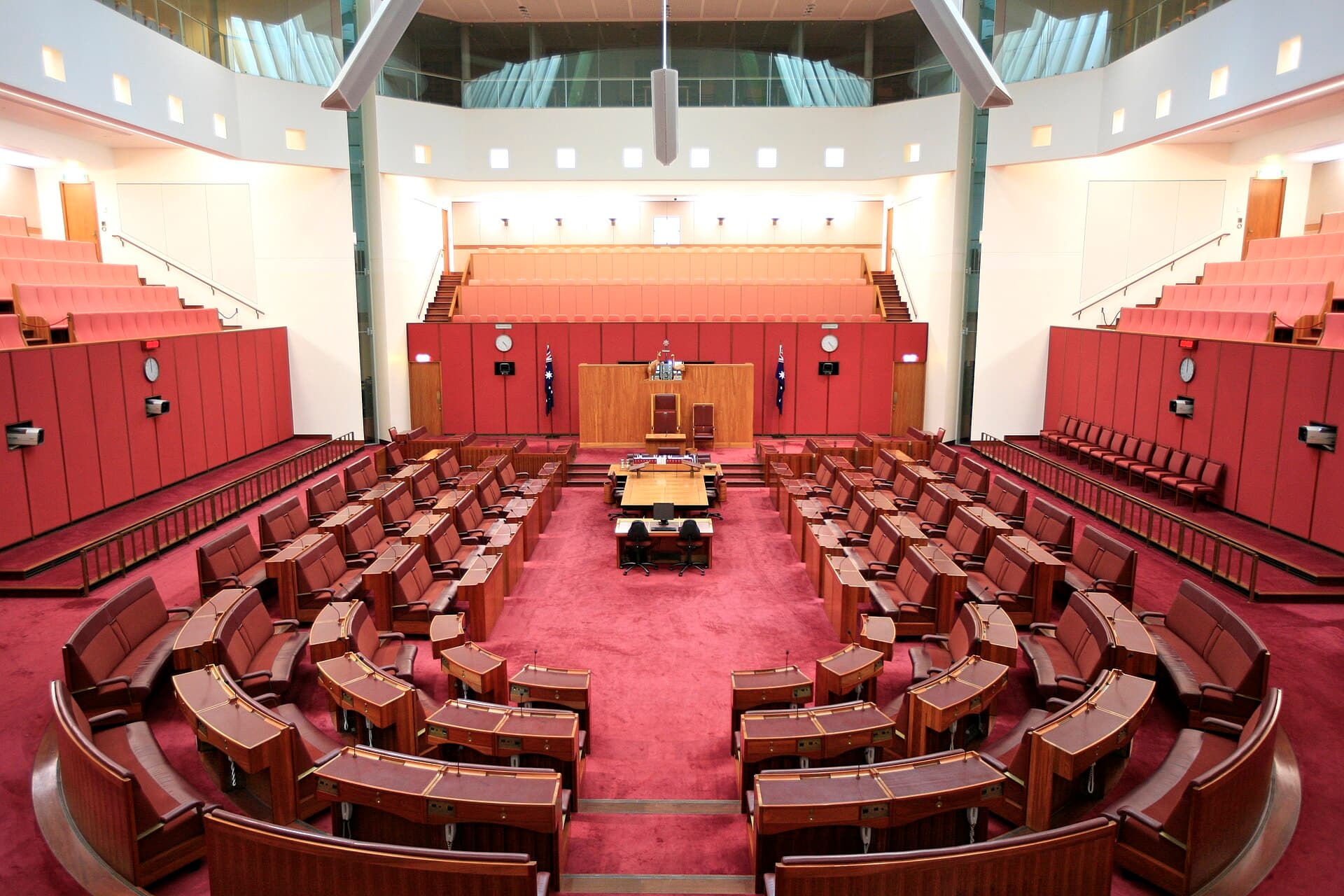
When the Senate week began on June 22, two of Australia's most disputed legislative packages sat unresolved: a generational tax overhaul affecting every capital asset in the country, and a structural redesign of the disability support system serving 760,000 Australians. By Tuesday morning, those two bills had been lashed together into a single parliamentary transaction — and the result, on close examination, satisfies neither side of the bargain it purports to strike.
The Australian Greens[1]Greens will support amended tax package to pass parliament; close loophole on self-managed super funds investing in housing“The Greens have today resolved to support the government's first tranche of tax changes to pass the Senate this fortnight.” announced on June 23 that they had resolved to support the government's first tranche of tax changes to pass the Senate this fortnight[1]Greens will support amended tax package to pass parliament; close loophole on self-managed super funds investing in housing“The Greens have today resolved to support the government's first tranche of tax changes to pass the Senate this fortnight.”, ending weeks of floor-debate uncertainty. The price was disclosed simultaneously: the government agreed to extend the Senate Community Affairs Legislation Committee inquiry into the National Disability Insurance Scheme Amendment (Securing the NDIS for Future Generations) Bill 2026 by eight weeks, with a final report now due August 14 rather than June 23[2]Tax changes to be passed after Greens NDIS deal“In exchange for the Greens' support of the tax changes, the government has agreed to extend the NDIS inquiry by eight weeks.”. An interim version of the committee report was tabled Tuesday. Labor also committed to amendments to the NDIS bill curbing ministerial powers and improving transparency — but the Greens confirmed they would oppose the NDIS legislation regardless.
Examine what each side actually secured and the deal looks considerably less decisive.
What did the Greens win on tax reform — and what did they concede?
The two amendments the Greens extracted from the government address genuine problems in the Treasury Laws Amendment (Tax Reform No. 1) Bill 2026[10]Treasury Laws Amendment (Tax Reform No. 1) Bill 2026 — Submission“We therefore recommend that the Bill not be passed as introduced.” as introduced. The first closes the self-managed superannuation fund limited recourse borrowing arrangement (LRBA) loophole. Superannuation funds are generally prohibited from borrowing to purchase assets because it increases financial system risk, but since 2007 SMSFs had been given an exemption enabling LRBAs to purchase property. The Greens-secured amendment closes that exemption prospectively — taking effect 45 days after royal assent, protecting contracts already signed, and providing time to finalise arrangements currently in train[1]Greens will support amended tax package to pass parliament; close loophole on self-managed super funds investing in housing“The Greens have today resolved to support the government's first tranche of tax changes to pass the Senate this fortnight.”. The second amendment removes the Treasurer's discretion to extend the 50 percent CGT discount to new asset classes or prescribe additional property types eligible for negative gearing deductions — eliminating what senators had called ministerial "Henry VIII powers."
The loophole being closed was real and growing. During the Senate economics inquiry, Senator McKim raised that self-managed super funds pay an effective tax rate of 10 percent on capital gains, are protected from the negative gearing changes in the legislation, and could still borrow to buy existing residential properties through LRBAs — prompting what McKim described as a "flood of spruikers online advertising SMSFs" as a budget loophole[12]Greens take aim at SMSFs in Senate CGT inquiry“Self-managed super funds pay an effective tax rate of 10 per cent on capital gains. They're protected from the negative gearing changes in this legislation, and they can still borrow to buy existing residential properties because of the fact that the limited recourse borrowing arrangements will remain in place.”. Closing that gap is a legitimate gain.
But the larger concession the Greens made — accepting the deal without removing grandfathering — is the one that will matter for years. Grandfathering under the bill means 1.7 million properties remain in the hands of investors eligible for CGT and negative gearing tax breaks[1]Greens will support amended tax package to pass parliament; close loophole on self-managed super funds investing in housing“The Greens have today resolved to support the government's first tranche of tax changes to pass the Senate this fortnight.”. Greens Leader Senator Larissa Waters acknowledged this plainly, saying Labor had "again ignored young people and renters." Before the deal was announced, Senator McKim had stated that "Labor's extremely generous grandparenting provisions have left so much money on the table"[13]Labor's tax changes to face Senate inquiry“Labor's extremely generous grandparenting provisions have left so much money on the table.” — a position the June 23 agreement does not correct.
This was a once in a generation moment to help young Australians — but by grandfathering in wealthy property investor tax perks Labor has once again chosen to put the 1% over the millions of people trying to buy their first home.
Senator Larissa Waters, Australian Greens Leader, June 23, 2026
The bill's other unresolved technical deficiencies persist alongside the Greens amendments. The Tax Institute — Australia's peak professional body for tax practitioners — recommended the bill not be passed as introduced, citing significant technical gaps, a compressed inquiry timeframe insufficient for legislation of this scale, and the absence of prior public consultation on the CGT and negative gearing measures[10]Treasury Laws Amendment (Tax Reform No. 1) Bill 2026 — Submission“We therefore recommend that the Bill not be passed as introduced.”. The apportionment formula that will determine every deemed disposal value on July 1, 2027 — the mechanism Australian taxpayers with illiquid or complex assets will need most — remains unpublished, to be set by ministerial legislative instrument at some unspecified future point. The SMSF loophole closure and ministerial discretion removal do not address that gap.
Does an eight-week NDIS extension actually protect participants?
The NDIS side of the deal is where the numbers become most damaging. From October 1, 2026, participant budget allocations for social, civic and community participation supports are reduced by 50 percent and capacity building daily activity allocations by 10 percent[14]NDIS Reform Roadmap 2026 to 2030: Securing the NDIS Bill Dates“From 1 October 2026, participant budget allocations for social, civic and community participation supports are reduced by 50% and capacity building daily activity allocations by 10%.”. That timetable is the government's own — it has not been altered by the June 23 deal. The final Senate committee report is now due August 14[7]National Disability Insurance Scheme Amendment (Securing the NDIS for Future Generations) Bill 2026 – Parliament of Australia“Reporting date: 23 June 2026”. The arithmetic is unambiguous: participants will begin losing supports 47 days after Parliament receives the committee's final findings.
The Greens have stated they want the eight-week extension to "build pressure on both Labor and the Liberals to withdraw support for the bill entirely." That is a political objective, not a safeguard. The October 1 cuts do not pause while that pressure accumulates.
The NDIS Future Generations Bill — by the numbers
- 350,000 fewer people on the NDIS projected by 2031: 240,000 exits plus 110,000 diverted
- 50% social participation support cuts scheduled from October 1, 2026
- 15 months gap between the October 2026 cuts and the January 2028 new eligibility framework start
- 4,500 public submissions to the Senate inquiry — fewer than 440 published before hearings began
- 47 days between the August 14 final committee report and the first scheduled support cuts
What the disability sector has been saying
The concerns that prompted the committee's repeated deadline extensions — from June 16 to June 19 to June 23, and now to August 14 — have not diminished. They have sharpened.
Children and Young People with Disability Australia CEO Skye Kakoschke-Moore told the Senate inquiry that the reforms "will push more families into crisis, result in cost shifting to already over-subscribed or even non-existent services, and lead to poorer outcomes for people with disability," representing "a move away from the fundamental principles on which the NDIS was based: that people with disability are entitled to individualised supports delivered by those that they choose"[8]NDIS overhaul will push families into crisis, Senate Inquiry told“In reality, they will push more families into crisis, result in cost shifting to already over-subscribed or even non-existent services, and lead to poorer outcomes for people with disability.”. Two in three new NDIS participants are under the age of 15 — the reforms will have a disproportionate impact on those who will live longest under the new regime.
Twelve disability representative organisations — including People with Disability Australia, Inclusion Australia, First Peoples Disability Network Australia, and the Australian Federation of Disability Organisations — called jointly for the bill not to proceed in its current form or within the current timeframe, citing "significant unresolved risks, insufficient safeguards and overly broad powers"[6]Disability groups make last-ditch bid to halt NDIS reform bill“DROs recommend that the Bill not proceed in its current form or within the current timeframe.”. The Australian Human Rights Commission's submission called for the bill not to be passed before the Parliamentary Joint Committee on Human Rights had reviewed the statement of compatibility with human rights, before a comprehensive gender impact analysis was completed, and before closer consultation with the disability community occurred[9]Inquiry into the NDIS Amendment (Securing the NDIS for Future Generations) Bill 2026“The submission calls for the Bill to not be passed before the Parliamentary Joint Committee on Human Rights has assessed the Bill and reviewed the Statement of Compatibility with Human Rights.”.
Advocacy for Inclusion described the bill as "a structural redesign of who can access the NDIS, how plans are funded, and how decisions are made and reviewed" — not the minor integrity measure the government's public framing suggests. The group noted that projected savings "come overwhelmingly from cutting supports for existing participants and tightening access — not from fraud measures"[5]NDIS Amendment (Securing the NDIS for Future Generations) Bill 2026“The projected savings come overwhelmingly from cutting supports for existing participants and tightening access – not from fraud measures.”.
Health and Aged Care Minister Mark Butler responded on ABC Insiders on June 14 that he was "utterly convinced this is the right plan for the NDIS and the hundreds of thousands of people that it supports"[11]TV interview with Minister Butler, Insiders – 14 June 2026“I'm utterly convinced this is the right plan for the NDIS and the hundreds of thousands of people that it supports.”, signalling no intention to withdraw the legislation regardless of inquiry findings. Nothing in the June 23 deal changes that position.
Who has to carry the bill from here?
With the Greens having ruled out support for the NDIS bill, Labor is now seeking Coalition support to pass the legislation through the upper house, where the opposition holds the balance of power[3]Senate inquiry delays NDIS reforms for second time“Labor is looking to strike a deal with the Coalition to pass the reforms through the upper house, where the opposition holds the balance of power, after the Greens ruled out support for the bill.”. The Coalition has demanded more transparency on the bill's modelling and impact, but has not committed either to supporting or blocking the legislation.
All Australian states and territories submitted jointly that they are "not in a position, and have made no agreement, to deliver like-for-like services to people who are exited from the NDIS"[3]Senate inquiry delays NDIS reforms for second time“Labor is looking to strike a deal with the Coalition to pass the reforms through the upper house, where the opposition holds the balance of power, after the Greens ruled out support for the bill.”. The foundational supports meant to replace the cut services are not designed, funded, or operational in any jurisdiction. When the August 14 report lands, that will still be the case — and October 1 will be seven weeks away.
The deal struck on June 23 will be framed as a parliamentary breakthrough. The tax reform bill will pass. The Senate's capacity for scrutiny will be cited. But neither the grandfathering that locks in concessions on 1.7 million investment properties, nor the October 1 timetable for cutting the social supports of hundreds of thousands of Australians with disability, has been changed by a single word of what was negotiated on Tuesday morning. Two bills, two sets of unresolved problems — and a Senate that declared the work done.