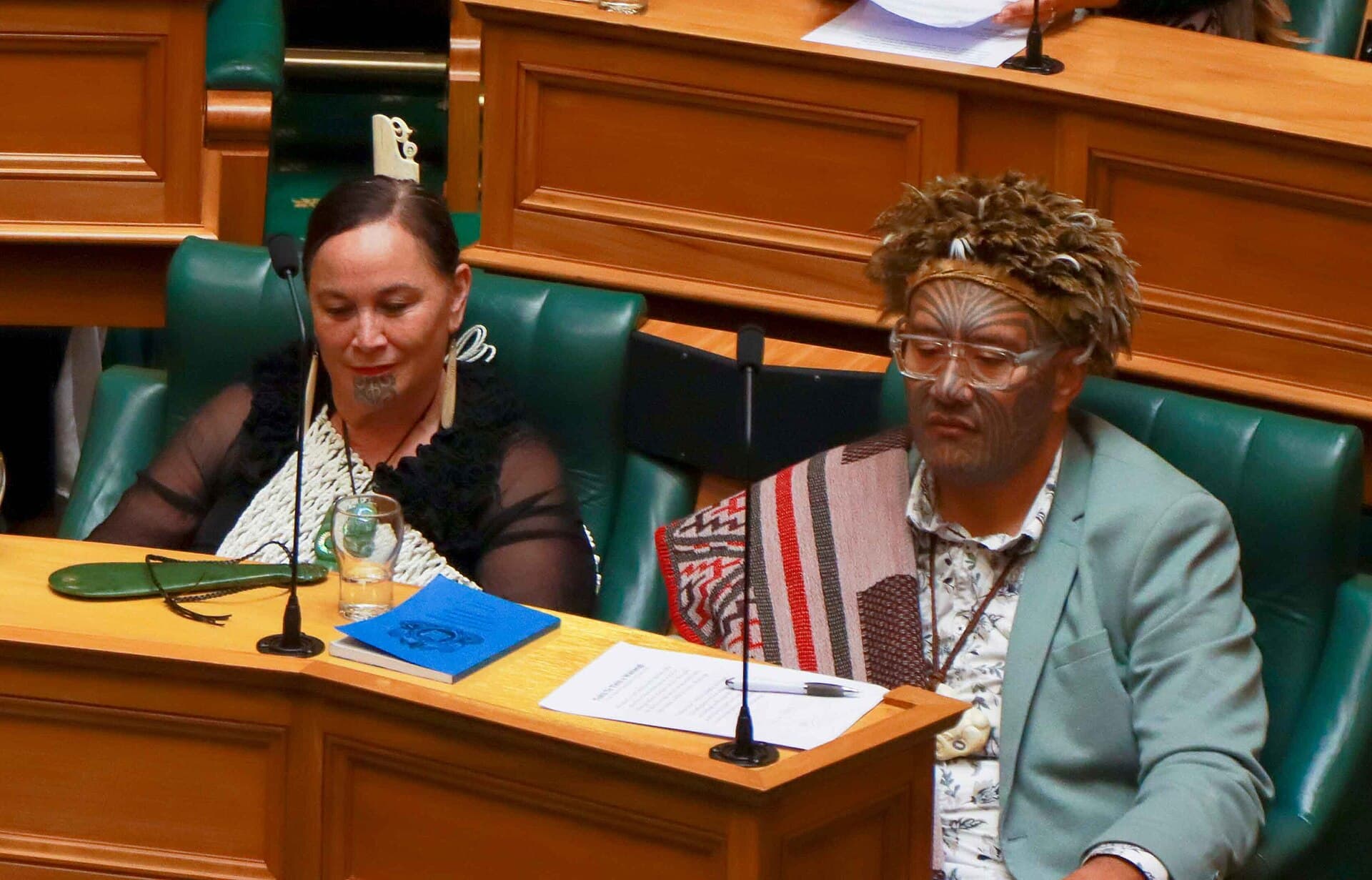
There is a moment — quiet, almost bureaucratic, easy to miss in the noise of Treaty clause hearings and referendum campaigns — when a number stops meaning what it should.
According to data published by Stats NZ and confirmed by Elections NZ as of April 1, 2026, more than 305,000 people are enrolled on the Māori electoral roll. More than 257,000 others of Māori descent are on the general roll. The Māori electoral population — the technical figure used to calculate how many parliamentary seats Māori voters are entitled to — has, according to Te Pāti Māori and analysis published by The Spinoff, exceeded the threshold for an eighth Māori electorate seat since January 2025.
That eighth seat does not exist. It will not exist after the November 7, 2026 election. Under legislation now before Parliament's Justice Committee, with a committee report due July 6, it will not exist after the 2029 election either. The government says this is about aligning electoral boundary reviews with a modernised census process. Critics say it is voter suppression by administrative design.
This is the quietest of the coalition government's moves against Māori political representation. It does not require a Waitangi Tribunal hearing. It does not require a referendum. It does not require the big speeches and the hīkoi. It requires only that a bill passes — which, with coalition votes, it almost certainly will.
Set alongside NZ First's push for a binding public vote to abolish all seven Māori parliamentary seats, and ACT's position that those seats should simply be repealed by Parliament without asking anyone, what emerges is a three-front squeeze on Māori representation unlike anything New Zealand has seen in the modern era. Each front operates through a different mechanism. Each is presented under the same general banner of "equal citizenship." Together, they compress Māori political power from below, from above, and from the middle — and most of it is happening in the technical weeds.
How did New Zealand arrive at seven Māori seats — and why does that number now matter so much?
The Māori seats were established by the Māori Representation Act 1867 — originally, in a phrase that has haunted New Zealand constitutional history ever since, as a temporary measure expected to last five years. Parliament created four electorates, covering an iwi population of around 50,000 people. In the same year, according to Te Ara – the Encyclopedia of New Zealand, the European population of 250,000 held 72 parliamentary seats — roughly one seat per 3,500 people. Each of the four Māori seats represented approximately 12,500 people. On equal-representation arithmetic, Māori would have needed 14 to 16 seats.
They were given four. They remained at four for 129 years.
The number did not move even as the Māori population grew, as European seats multiplied, as the franchise expanded. Between 1867 and 1993, the number of general electorates rose from 72 to 99 — reflecting population growth. The Māori electorates did not move. By 1993, according to a New Zealand Parliament research paper, each Māori electorate represented an average electoral population of 68,150 — nearly double the quota for general seats.
In 1975, the Labour government introduced the Māori electoral option: a mechanism allowing Māori to choose whether to enrol on the Māori roll or the general roll, with the number of Māori seats to increase or decrease based on enrolments. But within a year, according to NZ History, a new National government reversed the seat-increase provision, fixing the Māori seats at four regardless of roll numbers.
History, it seems, is moving in circles.
What does the boundary bill actually do — and why does it matter?
The Electoral (District Boundaries) Amendment Bill, introduced by the coalition government in early 2026, passed its first reading in March and has been before the Justice Committee since April 15, when submissions closed. The committee's report is due July 6.
The bill is framed as a technical response to the government's decision to move New Zealand's census from a five-yearly survey to an annual administrative-data-first model. Because the number of Māori electorates has historically been recalculated after each census — which triggered a boundary review — modernising the census process requires amending how and when those reviews happen. The government says the change is about administrative alignment, not politics.
But the bill's practical effects are stark. It delays the next electoral boundary review from 2029 to 2032, and shifts all future reviews to a six-year cycle — aligned with every second general election, rather than the previous five-yearly cadence. The result, according to Te Pāti Māori and backed by the data, is that the Māori seats will be frozen at seven for the 2026 and 2029 elections, even though the Māori roll already has the numbers for eight.
It will be completely undemocratic for the government to restrict Māori representation until 2032 when we are projected to have the numbers for 9 or 10 Māori seats by then.
Rawiri Waititi, Te Pāti Māori co-leader
Te Pāti Māori co-leader Rawiri Waititi said in an April 13, 2026 party press release that 40 per cent of the Māori population is under 18 years old — meaning enrolment pressure will only increase as that cohort reaches voting age.
The Spinoff's April 2026 analysis, by journalist Liam Rātana, put it plainly: based on the most current data — population figures from the 2023 census, the most recent enrolment data, and Stats NZ population estimates — Māori should currently have at least eight seats in parliament. If all eligible Māori switched to the Māori roll, there would be approximately 16 Māori seats. By 2048, there could be as many as 20.
The government argues the change merely defers a review, not denies representation. But deferral is not neutral when a community's population is growing faster than any other. Under the proposed changes, the next boundary review will begin from 2030, with results applying from 2032. That is two elections — eight years — during which roll numbers that already justify additional representation will go unhonoured.
The Māori seat numbers
- 305,000+ enrolled on the Māori roll as of April 1, 2026 (Stats NZ / Elections NZ)
- 257,000+ Māori on the general roll as of April 1, 2026
- 8 seats justified by current roll data, per Te Pāti Māori analysis
- 7 seats frozen until at least 2032 under the proposed bill
- 9–10 seats projected by 2032 under current growth trends
- ~16 seats if all eligible Māori switched to the Māori roll
- 40% of New Zealand's Māori population is under 18 years old
The New Zealand Council for Civil Liberties, in its own submission to the Justice Committee, argued the Māori electorates should be adjusted before every election — a position that aligned with Te Pāti Māori's member's bill, the Right to Switch Rolls Freely Amendment Bill, which would have achieved exactly that. That bill did not pass.
The Justice Committee is due to report back to Parliament on July 6, 2026 — just weeks before the Treaty clause review bill is expected to be introduced in early August. The timing ensures these changes will be processed at speed, with little opportunity for public reconsideration.
Why do people keep conflating three very different mechanisms?
Before proceeding, it is worth pausing on a confusion that pervades public debate and makes it harder to hold the government to account: the tendency to treat Māori parliamentary seats, Māori local government wards, and iwi co-governance appointments as a single phenomenon — "co-governance" or "race-based representation" — when they are constitutionally, democratically, and legally distinct.
| Mechanism | Level | How chosen | Who votes | Legal basis |
|---|---|---|---|---|
| Māori parliamentary electorates | National (Parliament) | Election by Māori roll voters | Eligible Māori on Māori roll | Electoral Act 1993 |
| Māori wards/constituencies | Local (council) | Election by Māori roll voters | Eligible Māori on local Māori roll | Local Electoral Act 2001 |
| Iwi / co-governance roles | Local and national | Appointed by iwi or hapū | Not voted on — appointed | Various statutes, agreements |
All three have been targeted by the coalition government, but in different ways and through different levers:
- Māori parliamentary seats are being squeezed via the Electoral (District Boundaries) Amendment Bill (freezing at seven until 2032), threatened via NZ First's referendum bill, and targeted for abolition by ACT.
- Māori local government wards were subjected to mandatory referendum requirements reinstated in 2024. Of 42 councils that held referendums in October 2025, 24 voted to remove their wards and 18 voted to keep them — although, as reported by Elections NZ, nationally there were almost 75,000 more "keep" votes than "remove" votes.
- Iwi and co-governance roles — appointed, not elected — have been rolled back across government: Te Aka Whai Ora (the Māori Health Authority) was abolished; section 7AA of the Oranga Tamariki Act was repealed; freshwater rules were amended to reduce iwi influence; and in early June 2026, the government announced it would remove iwi representatives' voting rights on council committees.
The Māori parliamentary seats and Māori wards are democratically elected mechanisms — just by a distinct electoral roll. Conflating all three under the label "undemocratic" or "race-based" misrepresents what these mechanisms actually are. The seats are representational provisions designed to ensure the treaty partner has a guaranteed voice in the system that governs it.
What makes the seats constitutionally vulnerable in a way general electorate provisions are not?
Here is a fact that receives far less attention than it should: the provisions governing the Māori electorates can be changed with a simple parliamentary majority. The provisions governing the general electorates cannot.
As a 2003 New Zealand Parliament research paper confirmed, the sections of the Electoral Act 1993 covering Māori representation — the definition of Māori, the Māori electoral districts, the Māori roll, the Māori electoral option — can be repealed by a simple majority in the House. By contrast, the equivalent provisions for general electorates are entrenched, requiring a 75 per cent parliamentary supermajority to change.
This asymmetry was an accident of legislative history rather than a considered constitutional position. But it has profound consequences. It means that a government with a simple majority — which the current National-ACT-NZ First coalition holds — can alter or eliminate Māori electoral representation with no greater procedural hurdle than passing any ordinary bill.
Those who argue Māori seats have special constitutional significance have long called for entrenchment. The Green Party's MP Hūhana Lyndon introduced a bill in January 2026 to do exactly that, requiring a 75 per cent majority to change or abolish the seats. That bill has received no government support. Meanwhile, NZ First's referendum bill and ACT's legislative abolition position sit waiting in the opposite direction.
Who exactly wants to abolish the seats — and how do their positions differ?
NZ First leader Winston Peters announced in February 2026 that his party would campaign on a binding referendum on the future of the Māori seats, held alongside the November 7, 2026 general election. His member's bill, introduced February 18, would put a single yes/no question to all New Zealand voters: "Should there be separate Māori seats in the New Zealand Parliament?"
Peters framed the proposal around democratic principle. "New Zealand First believes this decision should be put to a binding referendum, not made unilaterally, because we believe in our democracy and this issue needs to gain a true mandate from the people of New Zealand so we can move forward together, united, as one," his party said in a statement published on the NZ First website.
But the democratic calculus here deserves scrutiny. Submitting the dedicated representation of a minority community to a majority vote does not straightforwardly produce a democratic outcome — it produces a majoritarian one. As The Spinoff noted in February 2026, asking a national majority to decide on a minority's dedicated representation creates conditions where that minority is unlikely to control the outcome. Māori make up approximately 17 per cent of New Zealand's population. In a simple yes/no referendum open to all voters, the remaining 83 per cent would determine whether that 17 per cent retains elected representation specifically designed for their community.
ACT's position is cleaner in its logic, if no more persuasive in its substance. ACT Deputy Leader Brooke van Velden told RNZ in February 2026 that ACT would simply legislate the seats away. "It's been an ACT party position — and a longstanding position — that we should abolish the Māori seats, because it goes against what the ACT party philosophy is, which is that there should be all people equal before the law and that it's wrong to have separate seats based on people's ethnicity," she said.
This is a philosophically coherent position. It is also one that, applied consistently, would require abolishing all structural representational accommodations in New Zealand's constitutional system — including, presumably, the entrenched South Island seat floor.
Prime Minister Christopher Luxon, when asked about the referendum proposal in February, deflected. "What we're really focused on is fixing the basics and building the future at the moment," he told RNZ. National confirmed plans to run candidates in two Māori electorates — specifically Tāmaki Makaurau and Te Tai Hauāuru, as confirmed by a party spokesperson in May 2026 — but Luxon said the referendum question was not something National had discussed.
National's position is, in effect, to compete for Māori votes in elections that two of its coalition partners are simultaneously seeking to abolish or put to a national vote. This is studied ambiguity: National benefits from not committing to abolition while its partners energise their respective voting blocs by pursuing it.
How does the government's 'equal citizenship' framing hold up against the evidence?
The government's central argument — across the Treaty clause review, the Māori ward referendum requirement, the boundary bill, and the referendum push — is that New Zealand should move toward equal citizenship: one set of legal obligations and one electoral system applying equally to all.
It is a framing with genuine rhetorical appeal. But it has three serious problems.
First, it misrepresents the Treaty of Waitangi. Te Tiriti o Waitangi is not a document that creates equal citizenship. It creates a specific relationship between the Crown and Māori as tangata whenua. As law lecturer Carwyn Jones told the Waitangi Tribunal at the June 2-3 urgent hearing, "The Crown's proposals are the most damaging collection of clear and considered legislative treaty breaches that I've seen." A separate Tribunal finding cited in The Spinoff's June 2026 reporting stated that the Treaty clause review's education component was "as bad as the Treaty Principles Bill in its attempt to erase the Crown's duty to comply with the agreement made between Māori and the Crown in 1840."
Second, the "equal citizenship" framing selectively applies equality only where it reduces Māori entitlements, not where it would expand them. In 1867, equal representation on a population basis would have required 14 to 16 Māori seats. In 1993, before MMP reforms, each Māori seat represented nearly twice the population of each general seat. The current roll data suggests an eighth seat is mathematically justified. At no point has the "equal citizenship" argument been deployed in the direction of more Māori representation to match the arithmetic. It has consistently been deployed only to argue for less.
Third, the government's own officials have, repeatedly and explicitly, warned that its approach risks harm. As reported by Te Ao Māori News from the opening day of the Waitangi Tribunal's Treaty clause review inquiry, claims of a "lack of honour" dominated proceedings, with evidence that officials warned ministers and ministers decided regardless. The Waitangi Tribunal has found the Crown in breach of Treaty principles over the same process. Charles Rahiri, chief executive of Te Rūnanga o Ngāti Ranginui — whose iwi settled a Treaty claim with the Crown in 2025 and received a formal Crown apology — told the June 2026 Tribunal hearing: "The Crown cannot apologise in 2025 and repeat the same behaviours it apologised for in 2026."
What is the historical pattern — and why does it keep repeating?
The recurring freeze on Māori seats
- 1867 — Māori Representation Act creates four Māori seats as a temporary measure. Each seat represents ~12,500 Māori; each European seat represents ~3,500 Europeans.
- 1871 — Eastern Māori MP Karaitiana Takamoana moves (unsuccessfully) for population-based Māori representation.
- 1876 — Parliament petitioned for Māori representation "in the same proportion as the representation is of the European race." Seats remain at four.
- 1870–1938 — Māori seats denied the secret ballot for 68 years after its introduction in European seats. Electoral rolls for Māori seats not established until 1948.
- 1975 — Labour introduces the Māori electoral option: roll numbers to determine seat numbers.
- 1976 — New National government reverses this, fixing seats at four regardless of roll growth.
- 1993 — Electoral Act reforms allow seat numbers to reflect Māori roll enrolment. Seats grow from four to five under MMP (1996), then six (1999) and seven (2002).
- 2026 — Electoral (District Boundaries) Amendment Bill introduced: delays boundary review, freezing seats at seven until at least 2032, despite roll data justifying eight since January 2025.
The 1976 parallel is the most instructive. In 1975, Labour's Māori Electoral Option Act introduced a mechanism by which Māori roll enrolments would directly determine the number of Māori seats — exactly the principle the critics of the current bill argue should apply today. In 1976, a new National government removed that mechanism and fixed the seats at four, according to NZ History.
The seats stayed fixed at four for 17 years, during which the general electorate count continued to grow. The current bill does not fix the seats permanently at seven. But it fixes them at seven for two election cycles — the 2026 and 2029 elections — at a moment when the roll has already grown past the threshold for eight. The mechanism is different. The effect on Māori representation relative to population is structurally identical to what happened in 1976.
What are the stakes for the November election — and what has happened to the movement that was supposed to stop all this?
Five months before polling day on November 7, 2026, the picture inside the main vehicle for Māori parliamentary advocacy is turbulent.
Te Pāti Māori, which won six of the seven Māori electorates in 2023, enters this election season with its caucus fractured. MP Mariameno Kapa-Kingi was expelled from the party in November 2025, reinstated by High Court order in March 2026 after successfully challenging the expulsion as unlawful, and then announced the formation of a new party — Te Tai Tokerau Party — in May 2026. The four months of internal dispute spilled across social media and into electorate committees.
Meanwhile, Labour has announced a full slate of candidates across all seven Māori electorates with the explicit aim of winning seats back — having held only one (Ikaroa-Rāwhiti) after 2023. Labour leader Chris Hipkins described the approach as an "all out" fight. The Green Party has fielded Tania Waikato as its candidate for the Waiariki electorate, where she directly challenges Te Pāti Māori co-leader Rawiri Waititi.
All of this means that in November, the seven Māori seats — already frozen one below their mathematically justified level — will face crowded, competitive fields. They are being contested in an environment where, according to The Spinoff, 30 per cent of eligible Māori voters did not vote at the 2023 election.
The political response to the boundary freeze has been, to put it plainly, to accept it. Rather than mobilise around the denial of an eighth seat, some commentators are instead asking Māori voters to switch to the general roll for this election. The Spinoff reported in June 2026 that with the number of Māori seats not likely to increase until at least 2032, Māori are being encouraged to think about whether their vote would have more impact in a general electorate. There are 11 general electorates that were decided by fewer than 2,000 votes at the 2023 election.
There is tactical logic in this. But there is also something unsettling about the spectacle: a bill that has not yet passed — and that faces clear principled objections — is already reshaping the behaviour of Māori voters who are rationally adapting to what they expect to become law. The bill's effects are being realised before it has been signed.
What should happen instead — and what would actually honour the Treaty?
The government's position is that the boundary bill is a technical necessity following the census modernisation decision, that the referendum would simply let New Zealanders have their say, and that equal citizenship means consistent treatment under law. Each argument has surface plausibility. None survives contact with the full facts.
On the boundary bill: the government chose to modernise the census. The government could have chosen boundary review mechanisms that did not entrench Māori under-representation as a consequence. It could have, as Te Pāti Māori proposed, instituted boundary reviews before every election. It chose not to. That choice is not administrative necessity; it is a policy decision with a specific distributional impact — and that impact falls exclusively on Māori voters who have outgrown their current seat allocation.
On the referendum: if the democratic legitimacy of dedicated Māori representation is to be tested, the most defensible mechanism would be one in which Māori themselves make the determination. Labour's position — that Māori should decide — is more principled than putting the question to the general electorate, whose demographic weight would overwhelm Māori participation in any national vote. Peters invoked the 1986 Royal Commission's recommendation that Māori seats be abolished if MMP were adopted. What he did not invoke is that Māori organisations successfully argued for retaining the seats when MMP was introduced, precisely because MMP alone was not delivering the representation the commission had predicted.
On equal citizenship: New Zealand's democratic system already contains dozens of representational asymmetries. The South Island's fixed floor of 16 seats gives South Island voters structural over-representation relative to population. And entrenchment provisions that require a 75 per cent supermajority to change general electorate provisions but only a simple majority to change Māori electorate provisions are themselves a form of unequal treatment — one that systematically disadvantages Māori. If the government were serious about equal citizenship, it would entrench Māori electoral provisions at the same level as general ones.
Charles Rahiri told the June 2026 Waitangi Tribunal hearing: "The Crown cannot apologise in 2025 and repeat the same behaviours it apologised for in 2026. It cannot promise partnership and then legislate the mechanisms that uphold it. That is not how a treaty partner behaves."
That indictment applies precisely to the boundary bill. The government did not need to freeze the Māori seat count as part of census modernisation. It chose to. And that choice — quiet, technical, almost invisible — is the one most likely to endure.
Iwi and hapū will still be here in 2032, and in 2048, and beyond. Their population is growing. Their roll enrolment is growing. Their proportion of New Zealand's under-18 population is growing. The Māori seats, if they survive, will eventually reflect this — whether at seven or eight or 16 or 20.
The question the coalition is currently answering — through the boundary bill, the referendum push, the abolition drive, the Treaty clause review, the ward referendum requirement, and the removal of iwi voting rights on councils — is whether New Zealand's political institutions will acknowledge that growth as it happens, or resist it at every turn. The answer, so far, is resistance. Resistance accomplished through a bureaucratic bill in a justice committee, a referendum that would let 83 per cent of the population decide the representation of 17 per cent, and a legislative abolition that doesn't need asking permission from anyone at all.
A Justice Committee report is due July 6. Parliament goes back to the polls November 7. Between those two dates, New Zealand will decide whether seven is the right number — or whether it was ever supposed to be a ceiling.